

Stormwater pit installation follows six steps: find where water collects, check for buried services, choose the pit and grate, set the pit on a compacted base, connect the pipes with a steady fall to an approved outlet, then backfill and test. In NSW, the drainage connection is licensed work.
We cover whether you need a pit at all, pit sizes and grates, where the water is allowed to go and the NSW rules. You will also see which parts you can plan yourself and what a licensed plumber does on site.
Last reviewed: 8 October 2026
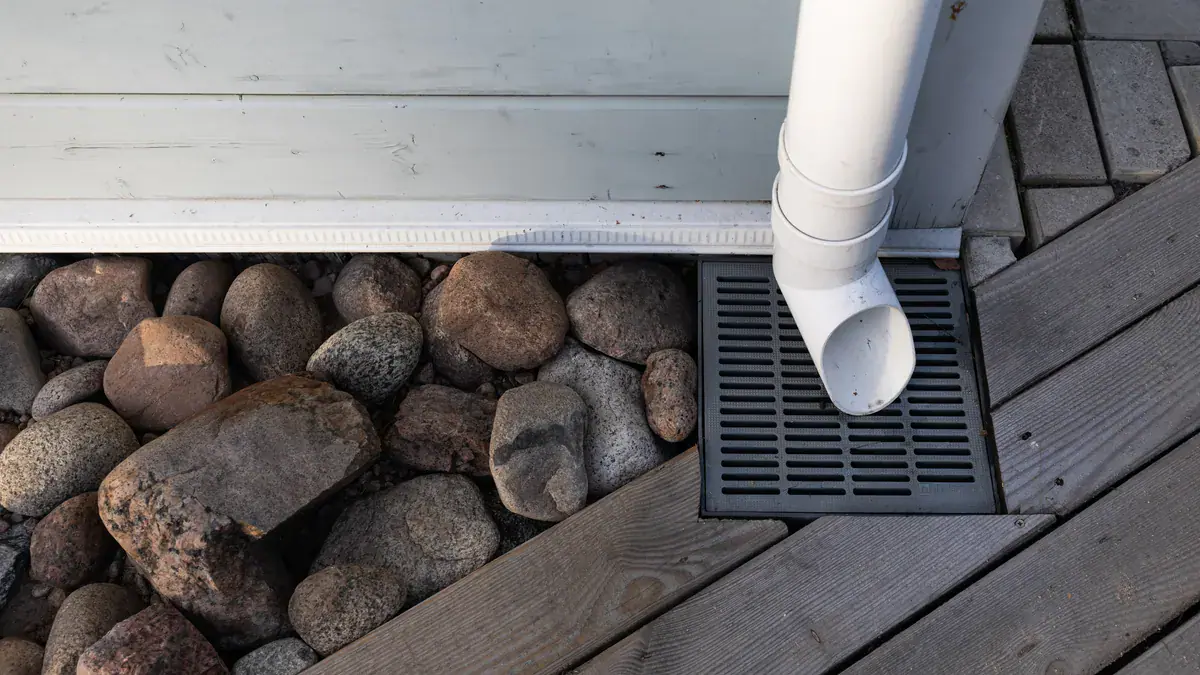
How stormwater pit installation works
Every residential stormwater pit goes in the same basic order, whether it sits in a lawn, a garden bed or a driveway. The first three stages are planning, and the last three are the drainage work itself.
- Find the low point where water collects and the legal outlet it can drain to.
- Check for buried gas, water, power and communication lines before any digging.
- Choose the pit size, material and a grate rated for foot or vehicle traffic.
- Dig the hole with clearance all round and set the pit level on a compacted base.
- Connect the inlet and outlet pipes with a steady fall towards the approved outlet.
- Backfill in layers, fit the grate and run water through to test the flow.
Steps four to six are stormwater drainage work, so in NSW they are done by a licensed plumber or drainer. The sections below explain each stage and where you can save time by preparing first.
What a stormwater pit does
A stormwater pit is a box set into the ground with a grate on top. Rain from downpipes, paving and lawn flows into it, the grate holds back leaves and debris, and a pipe carries the water away.
You may also hear it called a drainage pit or an inlet pit. Think of it as a collection point that stops your yard turning into a pond in heavy rain.
Most pits also trap silt in the bottom, which matters downstream. Sydney Water points out that stormwater is not treated before it flows into creeks, rivers and the ocean.
Do you need a pit at all?
A stormwater pit in backyard lawns and side paths is worth considering when the same spots flood after every storm. These are the signs we see most often on Sydney jobs:
- Water pooling in the same place after every rain.
- Puddles forming against the house or along a retaining wall.
- A soggy lawn that stays wet for days.
- Soil washing out of garden beds or from under paths.
- Damp or mould on walls near the ground.
- Runoff arriving from a neighbour higher up the slope.
Before you plan a new pit, rule out the drains you already have. A lot of the flooded yards we visit have a perfectly good system that is blocked, crushed or full of roots, and a drain camera inspection shows that quickly.
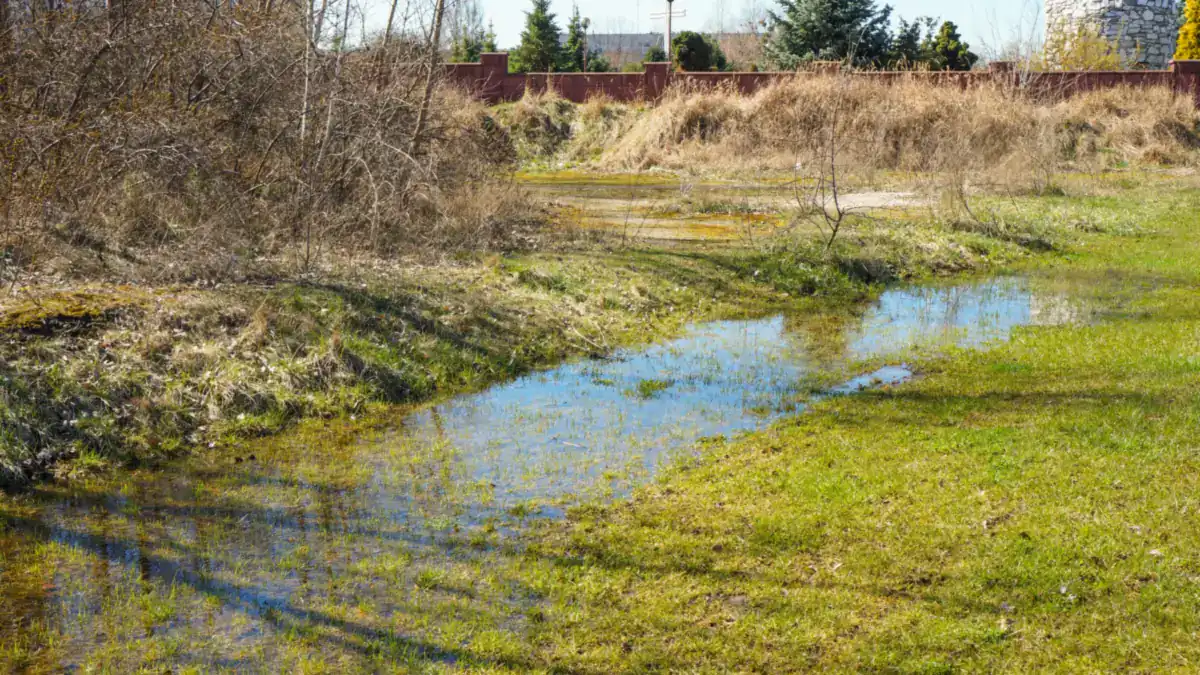
If the existing lines are clear and water still sits on the surface, a new pit or a gravel trench is the usual answer. Which one suits depends on how the water arrives.
Pit or gravel trench: which suits your yard?
A pit gathers water at one point, while a gravel trench with a slotted pipe picks it up along its length. The table compares the two.
| Situation | Better choice |
|---|---|
| Roof runoff from one or two downpipes | Stormwater pit Water arrives at one point and needs a grate and outlet |
| Paved area or driveway that drains to a low spot | Stormwater pit Choose a grate rated for cars if vehicles drive over it |
| Wide, soggy lawn with no single low point | Gravel trench with a slotted pipe Collects seepage along its whole length |
| Wet ground behind a retaining wall or footing | Gravel trench Often paired with a pit where the pipe changes direction |
| Both surface water and seepage | Both, joined into one outlet Common on sloping Sydney blocks |
Every yard is different. A plumber confirms the layout on site.
Many yards end up with both, joined so the trench feeds the pit. Our guide on how a French drain works covers the trench option in detail.
Pit types, sizes and grates
Choosing the right pit comes down to the area it drains, what will drive or walk over it and the soil. These are the main types on residential jobs:
- Precast concrete: the most durable choice, with high load capacity and a long life.
- Plastic or polymer: light, rust free and easy to handle, best for lawns and garden beds.
- Glass reinforced concrete (GRC): lighter than standard concrete with no steel inside to corrode.
- Modular or riser pits: sections stack to suit a deeper outlet or a larger catchment.
Size follows the pipes and the depth of the outlet more than the size of the block. A NSW council standard drawing for precast pits lists common sizes and the largest pipe each takes at an angled entry.
| Pit size (mm) | Typical use on a home |
|---|---|
| 450 x 450 | Single downpipe or small courtyard Too small for an angled pipe entry |
| 600 x 600 | Most backyard and side path pits Takes up to a 225 mm pipe at an angle |
| 900 x 900 | Larger catchments, junctions of several lines Takes up to a 375 mm pipe at an angle |
| 1200 x 1200 | Deep or main collection pits Step irons needed once deeper than 1200 mm |
Source: Armidale Regional Council standard drawing 080-040. Sizes vary by brand and council.
The grate matters as much as the pit. Plastic grates suit garden areas with foot traffic, heelguard grates stop shoes catching on paths, and cast iron or heavy duty grates belong on driveways.
Always match the load rating to how the area is used. A grate made for foot traffic can crack under a car.
Where the water goes
A pit is only as good as its outlet. Under the National Construction Code, where and how stormwater leaves your property must satisfy the appropriate authority, which in Sydney is usually your council.
In practice, the water goes to one of a few places. These are the options a plumber works through:
- A kerb outlet into the street gutter, the most common outlet for a house on flat ground.
- A council pipe or pit, sometimes through an easement at the back of the block.
- A rainwater tank, with the overflow piped to an approved outlet.
- An absorption trench, where the soil and the council allow it.
Absorption trenches let water soak slowly into the ground, so they work best in sandy soils. Much of Sydney sits on clay that holds water, so councils often limit them or ask for a larger trench.
Two outlets are never allowed. Stormwater must not go into the sewer, because rain in the wastewater pipes can overload them and cause overflows of diluted raw sewage.
It also must not be pushed onto the neighbours. Redirecting or concentrating runoff onto the property below is a common cause of disputes, and the plumber designs the outlet to avoid it.
If you are not sure who looks after which pipe, our guide on who is responsible for stormwater drains explains where your side ends and the council’s begins.
Stormwater pit regulations in NSW
Stormwater pit regulations start with the licence. The NSW Government says any plumbing or draining work in the state needs a licence or certificate, whatever the cost of the job.
Councils add their own approval for connecting to their network. The plumber checks your council’s rules and lodges any paperwork before work starts.
- Licence: the drainage work is done by a licensed plumber or drainer.
- Council approval: connecting to a council pipe or kerb outlet usually needs approval first.
- Standards: the work is built to the Plumbing Code of Australia and AS/NZS 3500.
- Neighbours: the finished system must not send water onto another property.
For new homes and major renovations, the stormwater plan is usually part of the development approval. In that case the pit locations and outlet are already drawn, and the plumber builds to that plan.
What you can do yourself
The planning stages are a good place to save time and money. Everything in the left column of this table is safe to do before a plumber arrives.
| Safe to do yourself | Licensed plumber or drainer |
|---|---|
| Watch the yard in heavy rain and mark where water collects | Design the pit and pipe layout and the fall to the outlet |
| Photograph downpipes, existing grates and the kerb outlet | Locate and test existing lines, including with a camera |
| Request free plans of buried services online | Excavate, bed and set the pit |
| Lift existing grates and scoop out leaves and silt | Cut in and connect inlet and outlet pipes |
| Decide which areas carry cars and which carry only foot traffic | Connect to a kerb outlet, council pipe or easement |
| Keep the finished grate clear and accessible | Test the system and provide the compliance paperwork |
Based on NSW licensing for plumbing and draining work.
Plans of buried services are free from Before You Dig Australia and can be requested online at any time. Having them ready helps the plumber price the job and keeps everyone clear of gas and power lines.
Digging a garden bed is your business, but the trench and the pit that join the stormwater system are part of the drainage work. Leave those to the plumber so the fall, the joints and the connection are right first time.
What a licensed plumber does on site
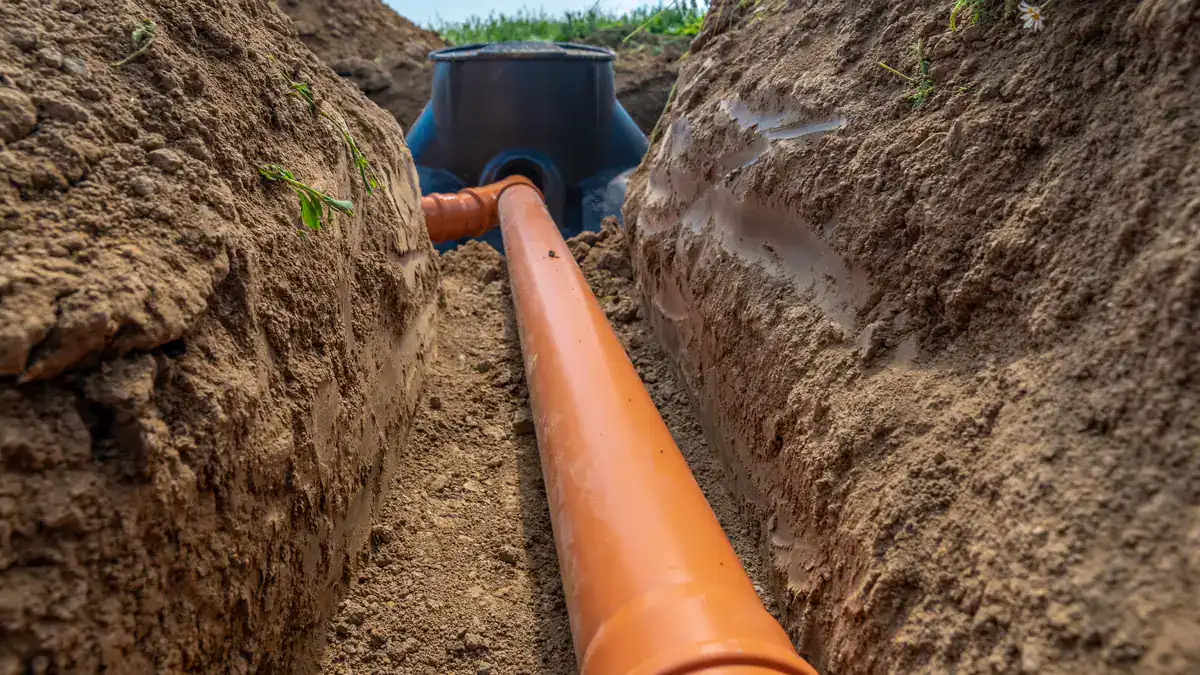
On the day, the plumber turns the plan into a working system. This is what a typical job looks like, based on a NSW council standard for precast pits:
- Mark out the pit and pipe runs, then confirm levels from the outlet back to the pit.
- Excavate with about 150 mm of clearance around the pit.
- Lay and compact a 150 mm bed of crushed rock or similar under the pit.
- Set the pit level at the finished surface height.
- Cut in the pipes so they finish flush with the inside wall, then seal the joints.
- Backfill in 150 mm layers, compacted evenly around all sides so the pit does not shift.
- Fit the grate, run water through and check it reaches the outlet.
Before connecting to a council pipe or kerb outlet, the plumber arranges any approval the council needs. On business.gov.au, for example, Blacktown City Council’s stormwater approval is only issued to a licensed plumber or drainer.
Pipes need a steady fall all the way to the outlet, or water sits in them and silt builds up. Getting the levels right from the outlet backwards is the part that most DIY pits get wrong.
The same care applies to downpipes feeding the pit. Our guide to connecting a downpipe to stormwater explains what that connection involves.
Our team installs and repairs pits as part of our drainage solutions for Sydney homes. We regularly work in suburbs such as these:
Common mistakes to check in a quote
Most failed pits come down to a handful of problems. Ask how the quote handles each one:
- Wrong size: a pit too small for its catchment overflows in a heavy storm.
- Soft base: poor compaction lets the pit sink or tilt over time.
- Flat pipes: pipes laid without enough fall hold water and silt.
- No access: a grate buried under turf or pavers cannot be cleaned.
- No legal outlet: a pit that drains nowhere just moves the puddle.
Looking after your pit
A pit needs very little care, but it does need some. Inner West Council, like most Sydney councils, makes owners responsible for the stormwater outlet from their property to the kerb and gutter.
- Clear leaves and debris from the grate, especially in autumn and after storms.
- Lift the grate twice a year and scoop the silt out of the bottom.
- Flush the outlet pipe gently with a garden hose.
- Look for cracks, a sinking grate or soil washing in around the edges.
If water still backs up after a clean, the blockage is usually further down the pipe. Our guide on clearing an outside drain covers the safe first steps.
Frequently asked questions
Can I install a stormwater pit myself?
You can plan it, request buried service plans and prepare the area. The drainage work and any connection to a council outlet must be done by a licensed plumber or drainer in NSW.
Can you cover a stormwater pit in your backyard?
No, the grate needs to stay open to the surface so water can get in and you can clean it. You can choose a grate that suits the garden, but never bury it under turf or pavers.
What size stormwater pit do I need?
Most backyards use a 450 mm or 600 mm square pit, with 900 mm pits for larger areas or junctions. The plumber sizes it from the pipes, the depth of the outlet and the area it drains.
How deep does a stormwater pit need to be?
Depth is set by the outlet level and the fall the pipes need to reach it. Pits deeper than 1200 mm need step irons, which is one reason deep pits are designed rather than guessed.
Can stormwater go into the sewer?
No, the two systems must stay separate. Sydney Water’s Wastewater Fix program warns that stormwater in its wastewater pipes can overload them and cause overflows, even inside homes.
When to call a plumber
Call a plumber when you have a clear picture of where water collects and want a pit designed and connected properly. Our drainage team can plan the layout and outlet with you.
If an existing pit is overflowing or draining slowly, the line may be blocked rather than undersized. Our blocked stormwater drain service can clear it and check the pipe.
This guide is general information. Plumbing, drainage and gas work in NSW must be done by a licensed tradesperson.