

Brown water from taps is usually iron, rust or sediment that has been stirred loose, either in Sydney Water’s main or in the pipes inside your home. Avoid drinking or cooking with discoloured water until it runs clear or Sydney Water confirms it is safe, and use this quick check to find the cause:
- Every tap, and your neighbours too: usually work on a nearby water main, which clears once repairs finish.
- One or two taps: old or worn pipes and fittings on your property.
- Hot taps only: your hot water system may need repairing or replacing.
This guide covers whose problem it is in Sydney, the checks you can safely do, how long each type of brown water takes to clear, and what’s safe for drinking, showering and washing. It also explains what a licensed plumber looks for when the cause is inside your property.
Last reviewed: 16 October 2026
Whose problem is it? A Sydney decision guide
Where the brown water shows up tells you more than its colour does. Match what you’re seeing to a row below before you call anyone, because it decides whether Sydney Water, a plumber or your strata manager should look at it.
| What you’re seeing | Likely cause and who to contact |
|---|---|
| Every tap, and the neighbours have it too | Work on Sydney Water’s pipes nearby Check Sydney Water’s service updates; call 13 20 90 if it doesn’t clear |
| Every tap, but the neighbours are fine | Possibly the pipe between your meter and the house Test the tap nearest the meter, then call a licensed plumber |
| One or two taps only | Old or worn fittings and pipes on your property Licensed plumber |
| Hot taps only | The hot water system may need repair or replacement Licensed plumber |
| Black specks | Usually perished tap washers or O-rings; at every tap, possibly a broken main Plumber for one tap, Sydney Water for all taps |
| Cloudy water that clears from the bottom up | Tiny air bubbles Nothing to fix |
| An apartment where other units have it too | The building’s shared pipes Building manager, strata manager or strata committee |
Source: Sydney Water fault and drinking water guidance; NSW Government strata guidance. Every property’s pipework is different.
Start at the tap closest to your meter
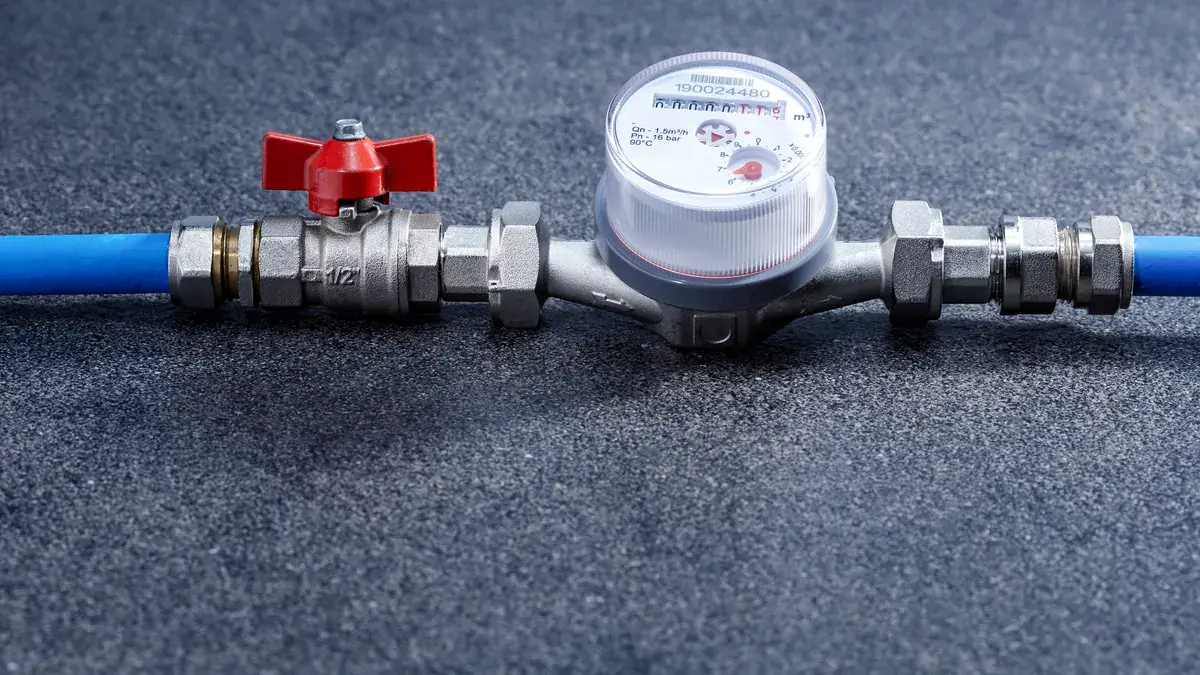
In Sydney, the boundary sits at the water meter. Sydney Water owns and maintains the main under the street and the meter itself, while owners look after the pipes on their side of it.
That makes the garden tap nearest the meter your best test point. If it runs brown along with every other tap, the dirty water is arriving from the street or travelling through your service pipe, rather than coming from one corroded fitting indoors.
If you can’t tell which side the fault is on, Sydney Water says it can help you work out where it’s located. Call it on 13 20 90 before booking anyone.
If you live in an apartment or unit
In a strata building, pipes in boundary walls and under the floor are generally common property, so the owners corporation looks after them. Plumbing inside internal walls and fixtures such as sinks, baths and showers is usually the owner’s job.
Ask a neighbour on your floor whether their water has turned brown as well. If it has, tell your building manager, strata manager or strata committee, as the NSW Government strata guidance suggests for common property repairs.
Renters should let their landlord or property manager know straight away. They arrange the plumber, and the record helps if the problem keeps coming back.
How to check where the brown water is coming from
These checks only involve running taps and looking at the water. None of them mean opening up pipes, the meter or the hot water unit.
- Run the cold tap nearest the meter. Usually this is the front garden tap; give it about 30 seconds and see whether it clears.
- Compare hot and cold. Run a cold tap, then a hot tap, in the same room and note which one is brown.
- Try other taps. Check the kitchen, bathroom and laundry so you know whether it’s one tap, a few or all of them.
- Ask a neighbour. If their water is brown too, the cause is almost certainly in the street rather than your home.
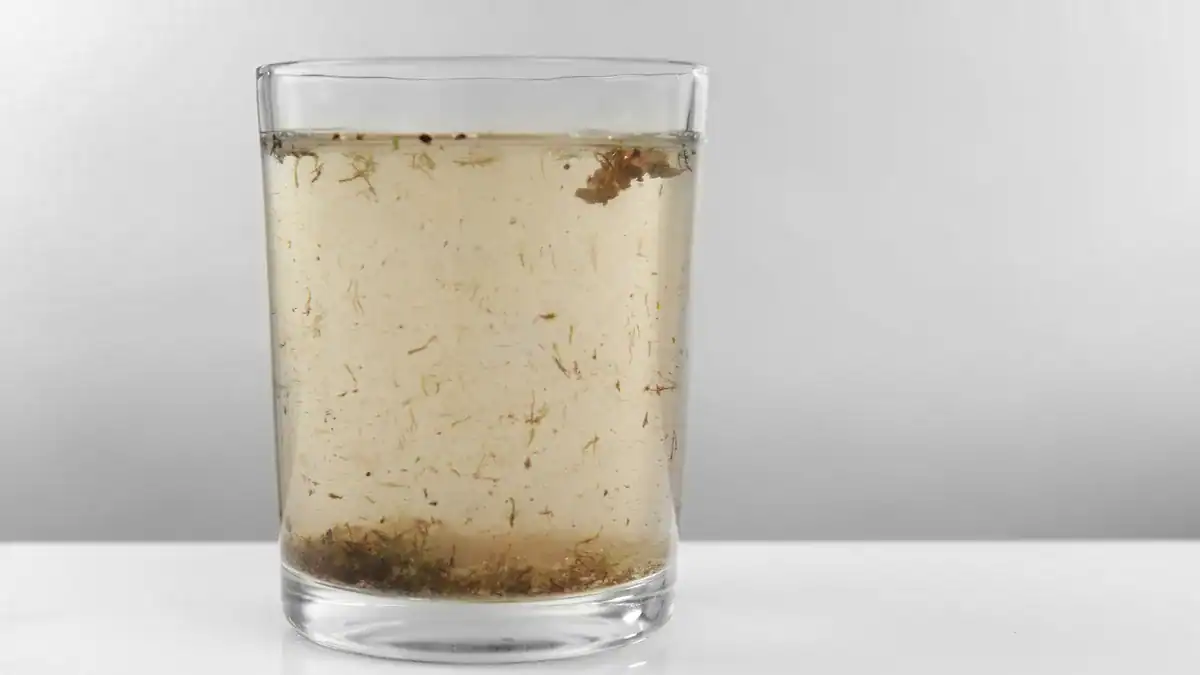
- Fill a clear glass. Cloudiness that clears from the bottom up is air, while specks or flakes that settle point to rust or sediment.
- Write down when it happens. Note the time and which taps were affected each time, which helps a plumber or Sydney Water find a pattern.
Hold off on the washing machine and dishwasher until the water is clear. They pull in a lot of water at once and can draw sediment through to your clothes and dishes.
If your whole street is affected, Sydney Water lists emergency repairs in its water supply and service updates for your area. That’s often the fastest way to confirm a burst or repair nearby.
How long brown water from taps takes to clear
How long you wait depends on the cause, and some causes won’t clear at all with flushing. Use these as a guide, then act if the water is still brown afterwards.
| Situation | Typical clearing time and next step |
|---|---|
| Cloudy or milky water | 30 seconds or less in a glass Air bubbles; no action needed |
| Brown at every tap | Run the cold tap for about 30 seconds first If it’s still brown, check for works nearby |
| After repairs on the main | A few minutes once the repairs are complete Still brown? Call Sydney Water on 13 20 90 |
| One or two taps | Flushing rarely fixes it for long Licensed plumber to check the fittings and pipes |
| Hot taps only | Won’t clear by running the cold side Licensed plumber to check the hot water system |
Source: Sydney Water fault and drinking water guidance. Times vary with the cause and the length of your pipes.
A tap that turns brown, clears, and then goes brown again a day later is worth a plumber’s visit. Repeat episodes usually mean the source is still there, in a pipe or in the hot water tank.
Keeping a simple log helps whoever investigates. The UK’s Drinking Water Inspectorate suggests noting each time you see the problem, and the same habit makes a Sydney plumber’s job quicker.
Is brown tap water dangerous?
The risk depends on the cause, and sediment stirred up from the mains is rarely a health problem. Sydney Water says a change in colour is normally still safe to drink, and that it will always notify customers about any health issue with their water.
Even so, the simplest rule is to wait until the water runs clear before you drink it or cook with it. That way you’re never guessing whether the colour came from the street or from a rusting pipe.
Drinking and cooking
Use bottled or previously stored water for drinking, baby formula and cooking while the colour lasts. Once the cold tap runs clear and stays clear, you can go back to using it as normal.
Sydney’s supply is tested against the Australian Drinking Water Guidelines before it reaches your street, which our guide on how Sydney’s tap water is tested explains. Discolouration usually comes from what the water picks up on the way to your glass.
Showers, baths and the toilet
Flushing the toilet with brown water is fine, as the cistern simply refills from the same supply. A short shower is generally fine too, although many people prefer to wait for clear water before running a bath.
The Water Corporation, Western Australia’s government water utility, says the sediment that discolours water is harmless and the water is safe to use. If the colour comes only from the hot taps, though, wait for a plumber to check the tank before you rely on it.
Laundry and stains
Iron and sediment can stain clothes, especially whites, so skip the washing machine until the water runs clear. If a load was already running, soak the clothes in clean water straight away.
The stain usually only sets if the fabric is allowed to dry. Rewash the load once the water is clear, and check it before it goes in the dryer.
Why tap water turns brown
If your water turned brown overnight, the cause is most likely one of four sources. Each one leaves a slightly different clue at the tap.
Work on the water main
Repairs, a burst main, a fire hydrant being used or a valve being opened can all change the flow in the street pipes. That rush of water lifts sediment that has settled in the main over years and carries it into nearby homes.
This type usually affects the whole street at once and clears on its own. Running the front tap once the repairs are finished flushes what’s left in your service pipe.
Old galvanised pipes
Many older Sydney homes still have galvanised steel water pipes, which rust from the inside as the coating wears away. Rust flakes break free when water has been sitting overnight or when the flow suddenly picks up.
The giveaway is brown water first thing in the morning, or after you’ve been away, that clears after a short run. Plumbing work in the house can also knock rust loose for a few days.
Specks, flakes or an even colour
Water that’s evenly tinted yellow, orange or brown usually carries fine sediment from the mains. Visible flakes or grit, on the other hand, are more often pieces of rust breaking away from a pipe or fitting.
Black specks are a different story. Sydney Water says they’re normally caused by perished rubber in tap washers or O-rings, which a plumber can replace.
Cloudy, black or blue-green water
Cloudy or milky water is usually just air trapped after maintenance work, and it clears from the bottom of a glass up. A blue or green tint, or blue-green staining on basins, can point to corroding copper pipes and is worth a plumber’s inspection.
Brown water from the hot tap only
When the cold taps run clear but you’re getting brown hot water, the problem is almost always inside the hot water system. Sydney Water advises that the service may need to be repaired or replaced, and that a licensed plumber should take a look.
Storage tanks collect sediment on the bottom over the years, and a tank that’s starting to corrode inside can send out rust-coloured water. Rumbling or popping noises and hot water that runs out faster than it used to often show up at the same time.
On a callout, our plumbers check the sacrificial anode, the metal rod that corrodes so the tank lining doesn’t, along with sediment build-up and the condition of the tank. A tank giving rusty water from a corroded lining is usually at the end of its life, and our team handles hot water repairs and replacements across Sydney.
If the hot water has other faults as well, such as running lukewarm or cutting out, our electric hot water troubleshooting guide covers the safe checks. Draining or flushing the tank and anything behind its covers is a job for the plumber.
What a plumber checks, and what’s licensed work
Once flushing hasn’t helped, the cause is usually somewhere you can’t see. A plumber works back from the affected taps to find where the discolouration starts.
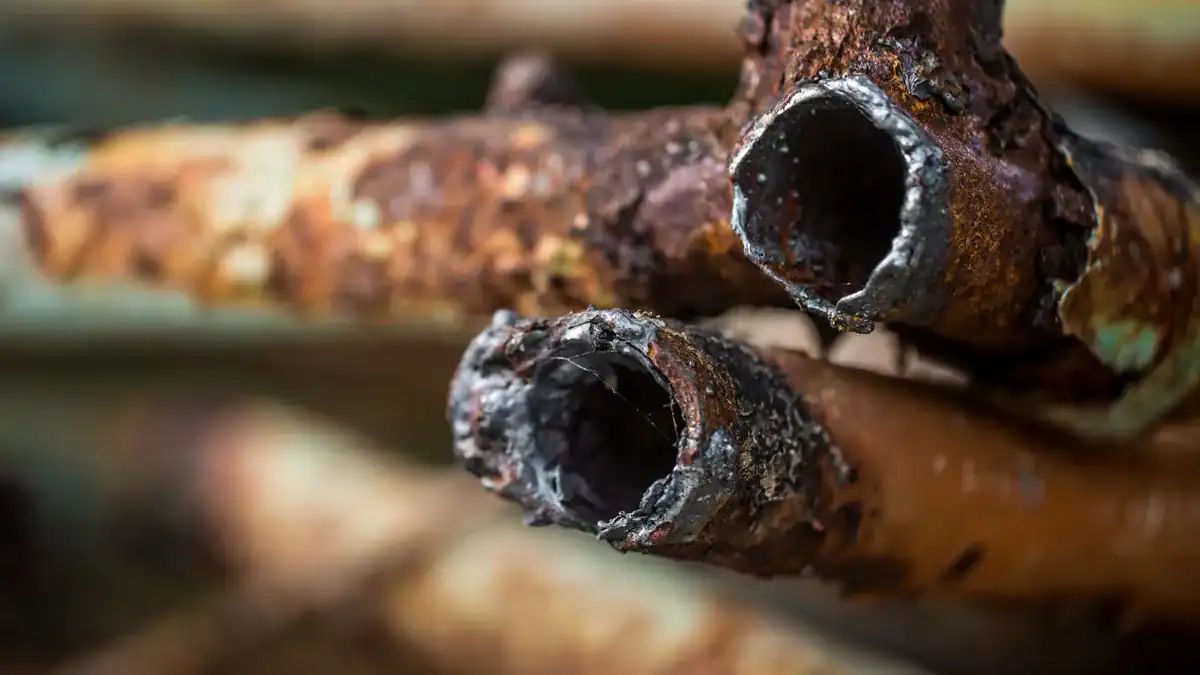
On a typical Sydney job, that means checking which pipe material the house has, looking for galvanised sections hidden under floors, and inspecting the fittings feeding the brown taps. They’ll also test the tap at the meter to rule the mains in or out, and check the hot water system if only the hot side is affected.
In NSW you need a licence or certificate to do any plumbing, draining or gasfitting work, according to the NSW Government. That covers replacing pipes, working on a hot water system and fitting a filter to the water supply.
When the pipes themselves are the problem, replacing the corroded sections with copper or plastic pipe usually fixes it for good. Our pipe repair team can find the failing run and replace only what’s needed.
How to stop brown water coming back
You can’t prevent works on the street main, but you can stop your own pipes adding to the problem. Most of the fixes are jobs a plumber does once and then they’re done.
- Replace old galvanised pipe. A plumber can swap rusting sections for copper or plastic, which don’t rust the same way.
- Keep the hot water system serviced. Regular checks catch a worn anode or heavy sediment before the tank lining starts to rust.
- Ask about a filter. A licensed plumber can fit a sediment filter where the supply enters the house.
- Run little-used taps now and then. Taps in a granny flat or spare bathroom give rust less time to build up in the pipe.
For storage tanks, our guide on how often a hot water system needs a service sets out the usual intervals. Catching a worn anode early is the main way to keep a storage tank from rusting inside.
Frequently asked questions
Can I shower if the water is brown?
A quick shower is generally fine, as the sediment is mostly iron and minerals. If the brown water comes only from the hot side, have the hot water system checked first.
Is it safe to use a toilet with brown water?
Yes, flushing is fine, and the cistern will refill with clear water once the supply clears. You may need to wipe a light stain from the bowl afterwards.
How long does it take for brown water to go away?
After repairs on the main, Sydney Water says it should run clear a few minutes after the work is complete. If it’s still brown after that, call Sydney Water on 13 20 90, or a plumber if only some taps are affected.
Why is my water brown in my apartment?
If other units have it too, the cause is usually the building’s shared pipes or the street main. Tell your building or strata manager, and call a plumber only if it’s just your unit.
Why is my water brown all of a sudden?
A sudden change at every cold tap usually means work or a burst on the main nearby, which stirs up sediment. If it’s only one cold tap, old pipe or fittings on that line are the more likely cause.
When to call a plumber
Call a licensed plumber if the brown water is limited to one or two taps, comes only from the hot side, keeps returning, or arrives with low pressure or damp patches near pipes. Those signs point to something on your property that flushing won’t fix.
Rapid Service Plumbing’s licensed plumbers trace discoloured water across Sydney, from corroded and leaking pipes to rusty hot water systems. A plumber can confirm where the discolouration starts and what it will take to fix.
This guide is general information. Plumbing, drainage and gas work in NSW must be done by a licensed tradesperson.