
That constant hiss or trickle from the bathroom is easy to tune out, but a running toilet wastes more water than most people expect. Sydney Water notes that a constantly running toilet can waste thousands of litres a day.
The fix itself is a job for a licensed plumber, but there’s plenty you can do first. A few simple checks will show you what’s going on, so you can describe the problem clearly and keep water waste down until it’s repaired.
Why Does My Toilet Keep Running?
After every flush, the cistern refills and should then go quiet. If it keeps running, water is getting past something that should be holding it back. Usually it means one of two things:
- The cistern keeps filling. Water keeps coming in and spills into the overflow, so the inlet valve never shuts off fully.
- Water keeps leaking into the bowl. The outlet valve at the bottom of the cistern is not sealing, so water slowly escapes into the pan and the cistern keeps topping itself up.
The Parts Inside an Australian Dual Flush Cistern
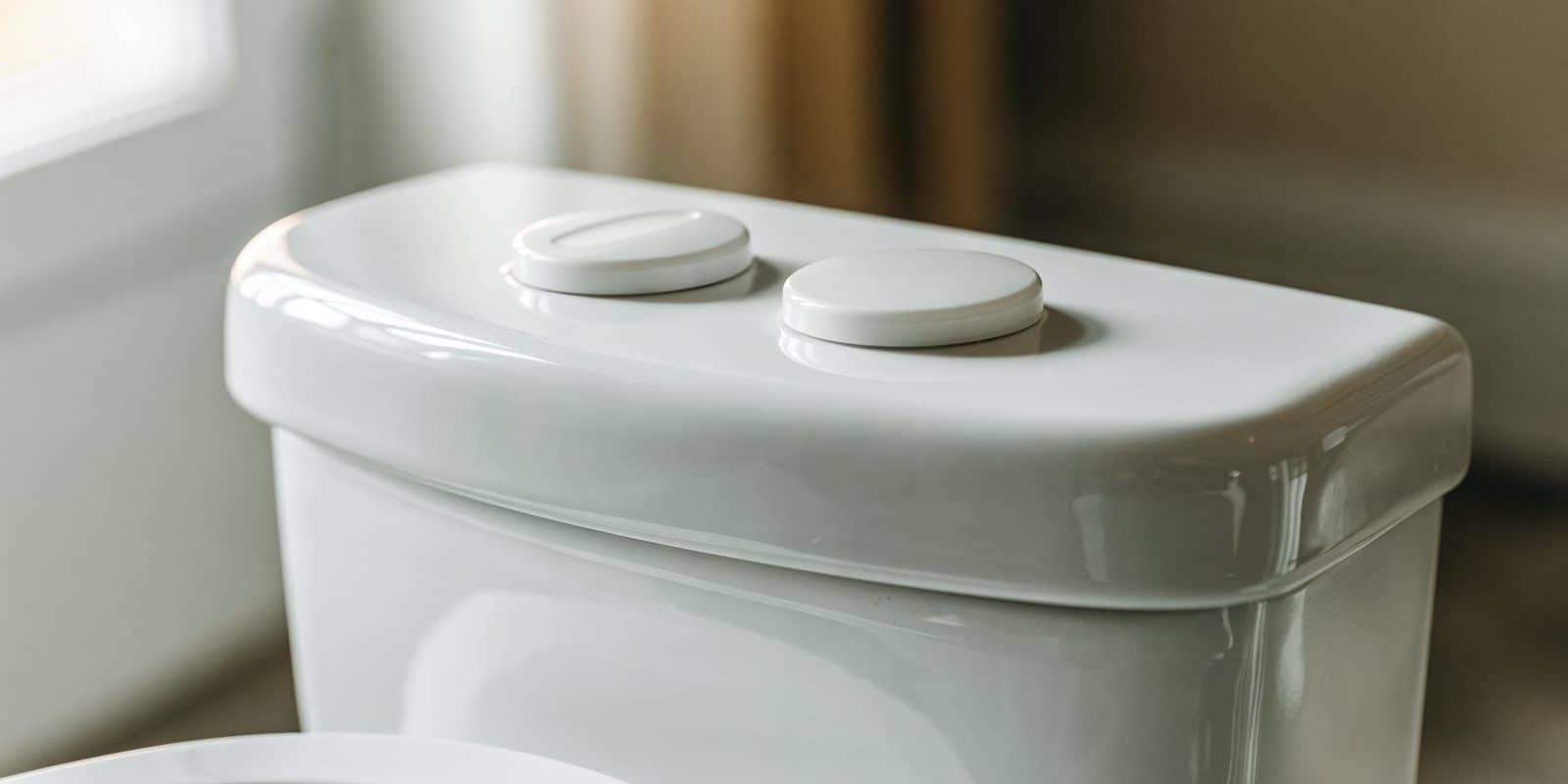
Many Australian toilets have a dual flush cistern operated by a push button rather than a lever and chain. Australian manufacturers such as Caroma refer to the inlet valve and outlet valve; the other names below are common general terms.
| Part | What it does | Common sign of a problem |
|---|---|---|
| Inlet valve (also called a fill valve) | Lets water into the cistern after a flush and shuts off when the cistern is full | A constant hissing or refilling sound, or water spilling into the overflow |
| Float | Rises with the water level and tells the inlet valve when to stop | Water level sitting higher than it should |
| Outlet valve | Seals the bottom of the cistern and opens when you press the flush button | A quiet, steady trickle into the bowl |
| Flush button | Operates the outlet valve for a half or full flush | Button sticking or not returning, so water keeps running |
| Overflow | Sends excess water safely into the bowl if the cistern overfills | Water flowing down it constantly |
Simple Checks You Can Make Safely
These checks are all about looking and listening. None of them involve taking anything apart.
Listen to the toilet
A hissing sound that never stops usually points to water coming in through the inlet valve. A quiet trickle with no hissing is more often water leaking out through the outlet valve.
Check the flush button
Press the button and let it go. If it sticks or does not spring back, the outlet valve may be held slightly open. Note which button is affected.
Look inside the cistern
If your cistern has a removable lid, lift it off carefully. Lids are often heavy and easy to chip, so rest it on a folded towel. Without touching the parts, watch what happens after a flush:
- Does the water level rise above the top of the overflow and spill down it?
- Does the water keep moving even when the cistern looks full?
Note what you see, then replace the lid. Some concealed cisterns have no accessible lid, in which case skip this check.
Try the food colouring test
Add a few drops of food colouring to the water in the cistern. Do not flush. Wait 10 to 15 minutes, then look at the bowl. If colour appears in the bowl, water is probably leaking past the outlet valve.
Try the toilet paper test
Sydney Water suggests placing a small piece of dry toilet paper at the back of the toilet bowl and checking that it stays dry until the next flush. If it gets wet, water may be leaking from the cistern into the bowl.
Check your water meter
Turn off all taps and water-using appliances, then look at your water meter. If it keeps moving, water is still being used somewhere, and a running toilet is one possible cause. Our guide on what to do when your water meter is spinning but you cannot find the leak covers this in more detail.
What the Checks Tell You
| What you noticed | Likely cause | Next step |
|---|---|---|
| Constant hissing, water spilling into the overflow | Inlet valve not shutting off, or float set too high | Book a licensed plumber |
| Quiet trickle, colour in the bowl, damp toilet paper | Outlet valve not sealing | Book a licensed plumber |
| Flush button sticking | Button or outlet valve mechanism | Book a licensed plumber |
| Water on the floor around the toilet or cistern | Possible leak at a connection, the cistern or the pan | Turn off the isolating tap and book a licensed plumber promptly |
Why Cistern Repairs Belong With a Licensed Plumber
In NSW, the NSW Government states that you need a licence or certificate to do any plumbing, draining or gasfitting work, regardless of the cost of the work. Replacing an inlet valve or an outlet valve is a job for a licensed plumber.
There are practical reasons too. Cistern parts are often specific to the brand and model, and a poorly fitted valve can leak onto the floor or keep wasting water. A plumber can identify the right parts, fit them correctly and check the rest of the cistern while they are there.
You can confirm a plumber’s licence before booking with the Service NSW licence check.
While You Wait for the Plumber
- If the cistern is overflowing or water is reaching the floor, turn off the isolating tap on the water pipe behind or beside the toilet. If you cannot find it or it will not turn, turn off the meter tap next to your water meter.
- If water has reached power points or electrical appliances, keep clear and do not touch them while standing in water or with wet hands.
- Wipe up any water on the floor to avoid slips.
Frequently Asked Questions
Is a running toilet an emergency?
Usually not, but it’s worth fixing promptly because of the water it wastes. It becomes urgent if water is overflowing onto the floor. Our guide on when a water leak becomes an emergency explains the difference.
Why does my toilet run for a few seconds every so often?
A toilet that refills briefly every so often, without being flushed, is often slowly leaking water into the bowl through the outlet valve. The food colouring and toilet paper tests can help confirm it.
My toilet is not flushing properly. Is that the same problem?
It can be related, but weak or incomplete flushes have their own causes. See our guide on why a toilet is not flushing properly.
Key Takeaways
- A running toilet usually means the inlet valve is not shutting off or the outlet valve is not sealing.
- Listening, checking the flush button, watching the water level and the food colouring and toilet paper tests are safe ways to narrow down the cause.
- In NSW, plumbing work needs a licence, and replacing inlet or outlet valves is a job for a licensed plumber.
- If water is overflowing, turn off the isolating tap behind the toilet or the meter tap.
For a leak that turns out to be from the cistern itself, see our guide on a leaking toilet cistern, or our toilet plumbing page for repairs.