
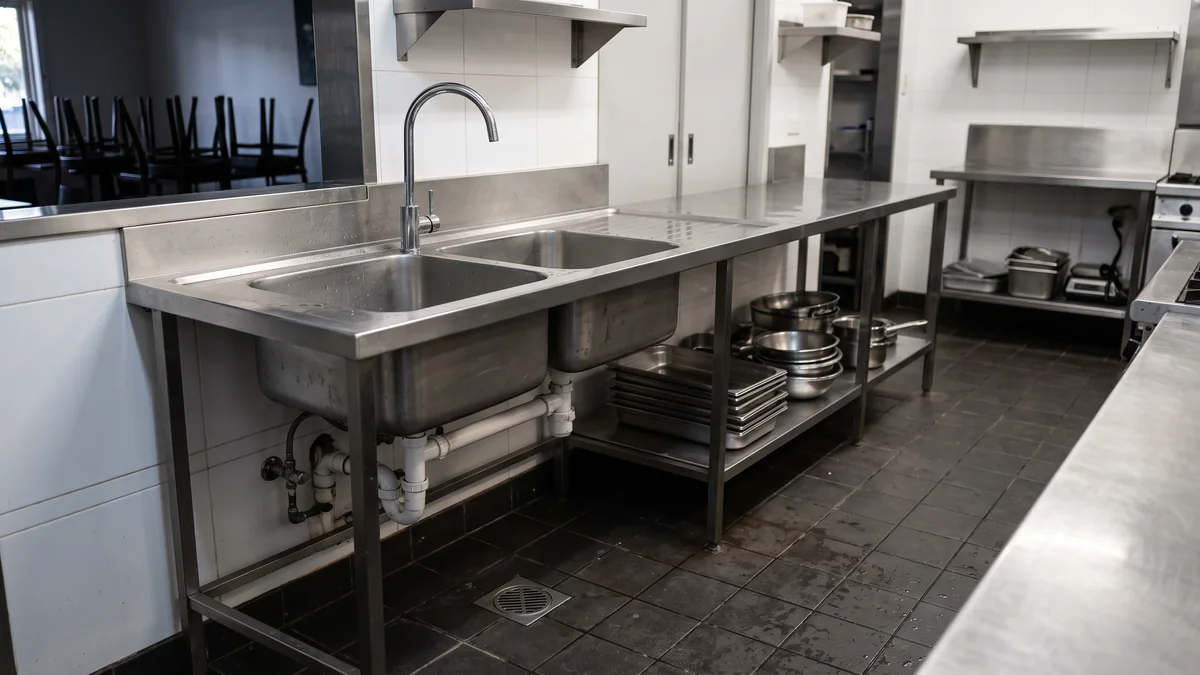
A grease trap is a tank that holds back grease and solids from commercial kitchen wastewater before it reaches the sewer. Sydney Water describes it as a holding tank that uses gravity to catch most of that waste. If your business cooks or serves hot food, it’s something you’ll need to understand early.
This guide explains how a grease trap works, which Sydney food businesses may need one, and how approval and pump-out timing are managed. It’s written for food businesses in Sydney Water’s area, not for ordinary homes or other parts of NSW. It’s general information rather than legal advice, so check your own requirements with Sydney Water.
What Is a Grease Trap?
A grease trap sits between your kitchen and the wastewater system (sewer). It’s a form of pre-treatment, which means it treats wastewater before it leaves your property.
What it does for your kitchen and the sewer
Sydney Water says food businesses produce far more fat, oil and grease than an average home. Cooking oils are usually liquid when used, but they harden as they cool and can block pipes. Sydney Water calls this waste FOG, short for fats, oils and grease.
Grease trap or grease arrestor?
You’ll see both terms in Sydney. Sydney Water’s public guidance mostly says “grease trap”, while its 2025 equipment standard says “grease arrestor”. Its listed products also include items named grease arrestors under the heading “Grease traps”. Check the exact product and its listing with Sydney Water rather than relying on the name.
How Does a Grease Trap Work?
Sydney Water’s standard says a grease arrestor relies largely on retention time and gravity. Wastewater slows down inside the tank, which gives grease and solids time to separate from it. Tank size, internal baffles and pipe layout all affect how well this works.
From sinks and floor wastes to the trap
Sydney Water says wastewater from food preparation areas, floor wastes, kitchen sinks, dishwashers and garbage areas should all flow to the grease trap. It should ideally drain by gravity, first to the trap and then to the sewer. Sydney Water also asks for the trap to be close to the kitchen, so long pipe runs don’t clog with grease.
What the trap can’t handle
A grease trap isn’t a bin. Sydney Water says it isn’t designed to accept waste oil tipped directly into it, and food scraps shouldn’t go down the sink either. An undersized trap won’t treat your wastewater properly, and Sydney Water may ask you to install more pre-treatment.
Which Sydney Food Businesses May Need a Grease Trap?
Sydney Water’s Plumbing for retail food businesses fact sheet gives a clear starting point. It says that if you cook or serve hot food, you must have a grease trap and a trade waste agreement with Sydney Water.
Examples from Sydney Water’s guide
The same fact sheet includes a guide to minimum pre-treatment for different food businesses. Sydney Water says these volumes are only a guide, and it determines the volume when it assesses your application.
| Business type | Sydney Water’s guide |
|---|---|
| Takeaway, including food court shops | 1,000 L |
| Snack bar or coffee lounge with hot foods | 1,000 L |
| Restaurant, 1 to 69 seats | 1,000 L |
| Restaurant, 70 to 199 seats | 1,500 L |
| Retail bakery, hot bread | No grease trap |
| Retail bakery, meat products cooked on site | 1,000 L |
| Ice cream parlour | No grease trap |
Even where the guide shows no grease trap, it still lists in-floor and in-sink bucket traps.
Home-based food businesses
Sydney Water says home-based food businesses may also require consent. That covers preparing food for sale through school canteens, markets, online sales or catering. If this describes your business, ask Sydney Water what applies to you.
How Sydney Water Approval Works
Grease trap requirements in Sydney come through trade wastewater approval. Trade wastewater is simply wastewater from business activity that needs managing before it enters the sewer.
Apply before you install or operate
Sydney Water says you must seek written approval before operating a retail food business, and it may need to inspect the property first. Applications go through Sydney Water Tap in, under “discharge trade wastewater”. Sydney Water also says to seek approval before you start installing a grease trap.
Choosing a listed grease trap
Sydney Water says it only permits authorised grease traps, so check its listed products before you buy anything. Changing or repairing equipment can matter too, because Sydney Water asks you to apply through Tap in to vary your agreement first.
Size is assessed for your site
Sydney Water says a grease trap must be at least 1,000 litres, with a maximum size of 5,000 litres. It also says to size the trap for your maximum hourly flow, now and into the future. Shopping centres and bigger sites have separate requirements, so raise these early.
Who Does What?
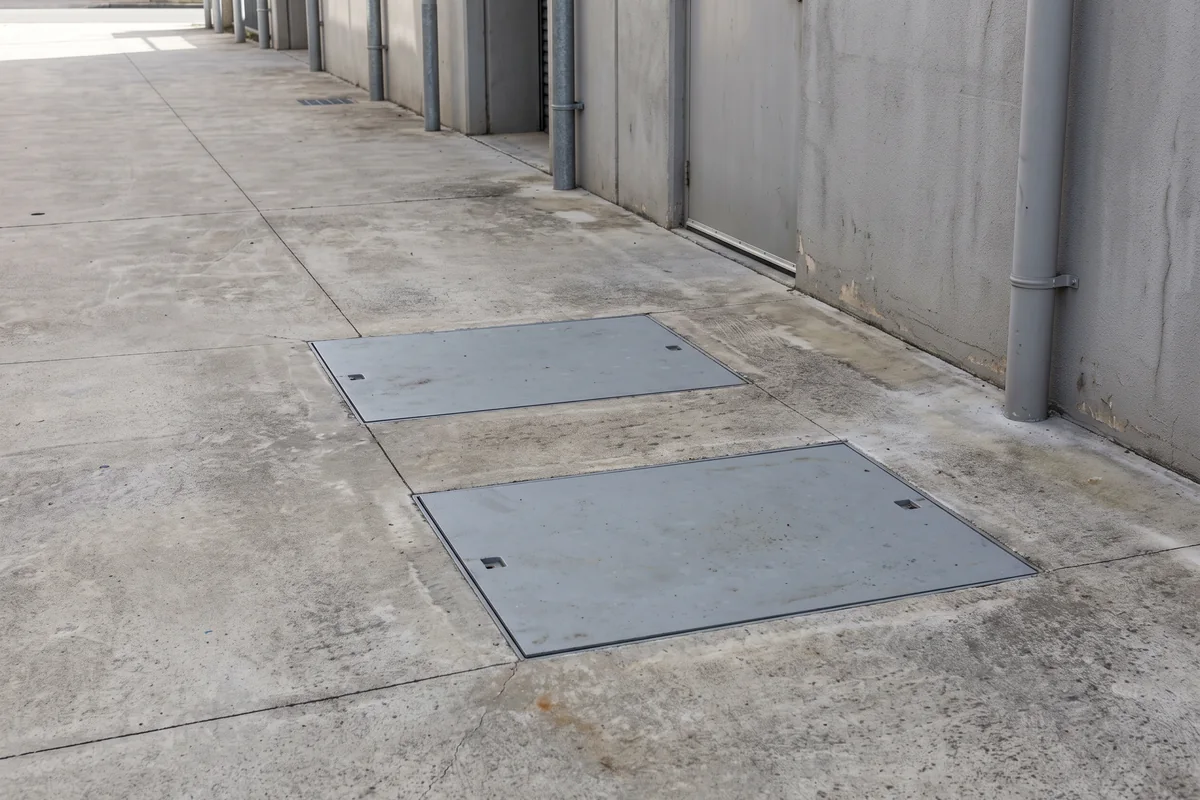
Several people play a part in keeping a grease trap compliant. Here’s how Sydney Water’s guidance divides the main roles.
| Who | Their role |
|---|---|
| Business owner | Applies for approval, follows permit conditions, keeps access clear and books regular servicing |
| Sydney Water | Assesses applications, sets site conditions and pump-out frequency, and inspects sites |
| Licensed plumber | Installs the grease trap and provides a Certificate of Compliance for the finished work |
| Authorised Wastesafe transporter | Pumps out the trap, cleans its internal surfaces, and transports the waste |
Sydney Water also requires backflow protection. It says a backflow-accredited licensed plumber must install and test the containment device, and our guide to backflow prevention devices explains why they matter.
How Often Should a Grease Trap Be Pumped Out?
There’s no single schedule that suits every kitchen. Sydney Water says it specifies how often your grease trap must be pumped out.
Why there’s no single schedule
Sydney Water bases the frequency on the size of your grease trap, and on the volume and quality of the greasy wastewater you produce. Two similar cafes could have different timing. Treat any general figure you read online with caution.
Where to find your frequency
Sydney Water’s pre-treatment fact sheet says your connection agreement will specify how often your trap must be pumped out. If you can’t find it, ask Sydney Water through its commercial trade wastewater page.
Who handles grease trap cleaning
People often search for grease trap cleaning, but in Sydney Water’s area this is part of the pump-out. Sydney Water says an authorised Wastesafe transporter must pump out the wastewater and clean the trap’s internal surfaces. You choose from Sydney Water’s directory, and it says it doesn’t endorse any transporter.
Wastesafe is the electronic system Sydney Water uses to track grease trap waste. Sydney Water says your barcode must stay visible and easy to reach, so your transporter can scan it at each visit.
Managing Fats, Oils and Grease in Your Kitchen
Good habits in the kitchen help your grease trap work better. Sydney Water says that reducing the waste you produce helps too.
What goes where
Sydney Water’s guidance is clear about what should stay out of the trap and the drain.
| Item | What Sydney Water says |
|---|---|
| Waste oil from fryers and barbecues | Store in sealed containers in a bunded area, for collection by an oil recycler |
| Food scraps | Put in the bin or compost, not down the sink |
| Prep sink and floor waste solids | Use authorised in-sink and in-floor bucket traps |
| Solvents, enzymes, bacteria and odour control agents | Not permitted in grease traps |
| Potato peeling machine wastewater | Don’t direct it to a grease trap |
A bunded area is one where leaking oil can’t escape.
Food waste disposal units
Sydney Water says it doesn’t allow sink-to-sewer waste disposal units, in-sink food waste disposal units or garbage grinders on business premises. Check any food waste equipment with Sydney Water before you buy it.
Inspections and approval
Sydney Water says it may inspect your site to check you’re meeting the conditions of your permit. It also says that if you don’t comply, it may disconnect your services.
Signs of a Drainage Problem
Sydney Water says regular servicing helps avoid overflows and odours. If your kitchen drains are slow, or you notice smells or backups, the cause might be the trap, the pipes or both.
Start by checking when your trap was last pumped out, and speak to your Wastesafe transporter if a service is due. If drains keep slowing down after that, the problem may be in the pipework. Our kitchen plumbing page explains how fat builds up, and a drain camera inspection can show what’s happening inside the line.
Frequently Asked Questions
Do I need a grease trap for a small cafe?
Possibly. Sydney Water says businesses that cook or serve hot food must have one, and it assesses each application, so confirm your requirements before you open.
Can a plumber pump out my grease trap?
In Sydney Water’s area, pump-outs must be done by an authorised Wastesafe transporter, so a plumber can only do one if their business is also listed in Sydney Water’s Wastesafe directory. Otherwise, a licensed plumber’s role is the installation and the plumbing work around the trap.
Can I empty my own grease trap?
Sydney Water says you must use a Wastesafe transporter to clean a grease trap, by pumping it out at the frequency it sets. If you have a question about your site, ask Sydney Water.
Need Help With Your Kitchen Drains?
If grease keeps slowing or blocking your kitchen drains, Rapid Service Plumbing can clear the line and use a drain camera to help find what’s causing it. Pump-outs stay with your authorised Wastesafe transporter, and approvals stay with Sydney Water.
Sources
All sources were accessed on 3 November 2026. Sydney Water requirements apply within its area of operations and can change, so check the current version before you act.
- Sydney Water, Plumbing for retail food businesses, version 3, 20 November 2025
- Sydney Water, Commercial Trade Wastewater Pre-Treatment Equipment Standard, version 1.0, 24 November 2025
- Sydney Water, Grease traps and other pre-treatment (undated web page)
- Sydney Water, Food business wastewater (undated web page)
- Sydney Water, Commercial trade wastewater (undated web page)
- Sydney Water, Listed pre-treatment for food businesses (undated web page)
- Sydney Water, Select your Wastesafe transporter (undated web page)
- Sydney Water, Everything you ever wanted to know about grease traps (fact sheet, file modified June 2023)
- Sydney Water, Understanding the wastewater system (fact sheet, file modified March 2022)