
The Rinnai Infinity 26 reset button is not a separate button on the unit. To reset it, press the On/Off button on your water controller twice, or switch the heater off at its power point, wait 10 seconds and switch it back on.
Below you’ll find where to look on each model, the reset order Rinnai’s manual gives, what each error code means and which faults a reset will not fix. It also covers the checks behind a Rinnai water heater not heating water, and where the homeowner’s part ends and a licensed gasfitter’s begins.
Last reviewed: 8 October 2026
Where is the Rinnai Infinity 26 reset button?
There isn’t one in the sense most people expect. The Rinnai Infinity 26 has no small red button hidden under the cover, and the cover should stay on because the unit has no parts a homeowner can service.
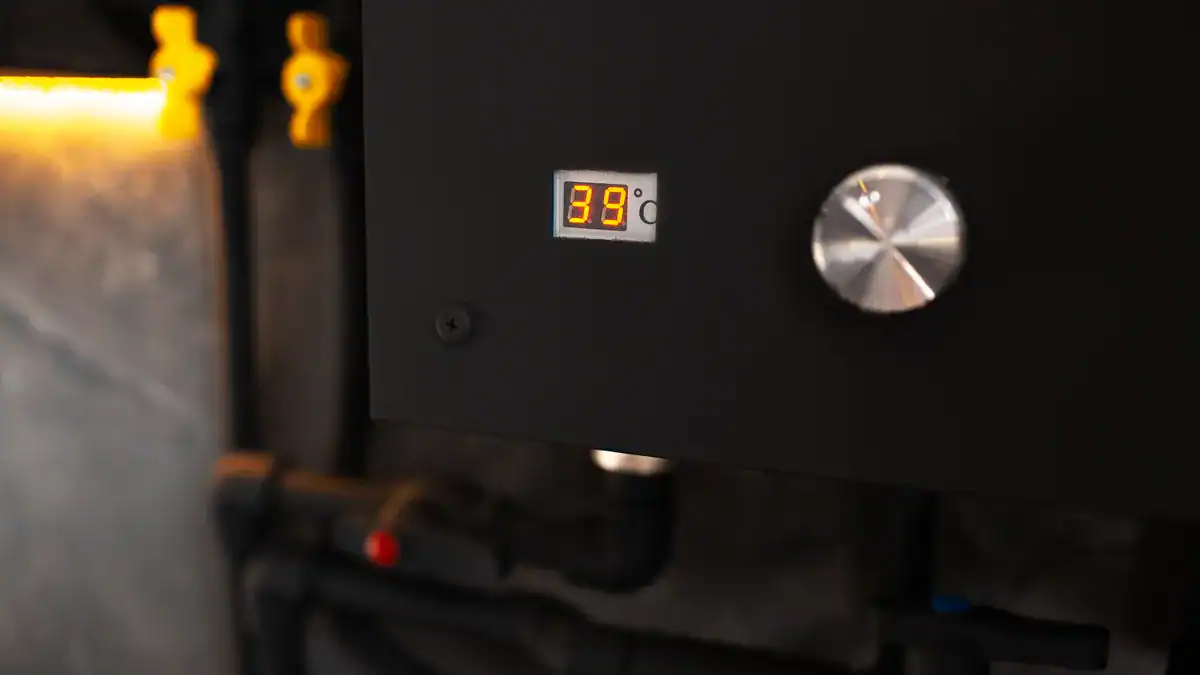
The reset lives on the water controller instead, usually a small panel in the kitchen or bathroom with a digital display. Its On/Off button doubles as the reset, and pressing it twice restarts the system.
A continuous flow unit heats water only as it passes through, which is why YourHome says these systems cannot run out. It also means the heater sits idle between uses, so a fault only shows when someone turns on a hot tap.
The B26 and the Infinity Enviro models are a little different. Rinnai’s manual notes they have no status monitor on the front cover, and many B26 homes have no controller fitted at all, so the power point is the only way to restart them.
How to reset a Rinnai Infinity 26 or B26
Rinnai’s own manual sets out a gentle order for clearing a fault, starting with the easiest step. Work through it from the top and stop as soon as hot water returns.
- Note the error code flashing on the controller before you touch anything.
- Turn the hot water tap off, then turn it on again.
- If the code is still there, press the On/Off button off, then on again.
- Still showing? Switch the heater off at its power point, wait 10 seconds and switch it back on.
- If the same code returns, stop resetting and book a service.
The same order answers how to reset Rinnai gas heater models across the Infinity range, from the Infinity 16 to the Infinity 32. One manual covers them all, along with the B16, B20 and B26.
Pressing On/Off twice is the quick version of step three, and it is the line the Rinnai manual quotes for clearing a stuck controller. On a unit with no controller, step four is your reset.
Avoid pressing On/Off while the “In Use” flame symbol is lit, because that turns the heater off mid-shower for whoever is using it. There is also no pilot light to relight, since the Infinity range uses electronic ignition every time a hot tap opens.
Rinnai error codes: reset or call?
A code tells you far more than the reset does, so write it down first. These meanings come from the Australian Rinnai Infinity manual, which covers the Infinity 26 and the B26.
| Code | What it means and what to do |
|---|---|
| 03 | Power cut during a bath fill Safe to try: close all hot taps, press On/Off twice |
| 11 | No ignition or no gas supply Safe to check: gas valve at the heater and at the meter or cylinder |
| 12 | Flame failure or low gas flow Safe to check: gas valves, and nothing blocking the flue outlet |
| 10 | Air intake or flue blocked Service call |
| 14 and 16 | Flame safety device tripped (14) or over temperature warning (16) Service call |
| 32, 61, 65 | Outlet temperature sensor (32), combustion fan (61) or water flow control (65) fault Service call |
| 70, 71, 72 | Microprocessor fault Service call |
| LC | Scale build-up inside the heat exchanger Service call |
Source: Rinnai Australia, Infinity owner’s manual. Some codes only appear on certain models.
Codes 11 and 12 are the two most homeowners can sort out, because both often trace back to gas not reaching the burner. Everything marked “service call” points to a part inside the sealed unit, so another reset only hides the fault for a while.
If the heater in question is a different brand, our Rheem troubleshooting guide covers its codes and reset steps. Rinnai and Rheem codes do not share meanings, so check the badge on the cover first.
Rinnai not heating water: what to check
A unit that fires but delivers lukewarm water usually has no code to show. Most of the causes sit at the tap or the controller rather than inside the heater.
- Open the hot tap further, as Rinnai notes the burner can go out at very low flow.
- Check the controller’s set temperature, and whether another controller holds priority.
- Remember that while a hot tap is running the setting cannot be raised above 43°C.
- Look at the showerhead and tap aerators for build-up that cuts the flow.
- Ask whether only one tap is affected, which points to that fixture rather than the heater.
Flow matters more for a continuous flow unit than for a tank. The government’s YourHome guide notes that some gas units run erratically at low flow rates, and that a water-saving showerhead should not cut the flow too far.
When the water runs hot but weak, the cause is often in the pipes or fixtures rather than the heater. Our guide to weak hot water flow at the tap walks through those checks.
Using the Priority button
Homes with more than one Rinnai controller can only take orders from one at a time. The panel with its Priority light on sets the temperature for the whole house.
To move priority, close every hot tap, then press the Priority button on the controller you want to use. Rinnai blocks the change while hot water is flowing, which is a safety feature rather than a fault.
Bathroom controllers are capped at 50°C by design, so a shower that feels cooler than the kitchen is normal. That cap protects people, as the Sydney Children’s Hospitals Network explains that 60°C water can burn a child in about five seconds.
The NSW rules behind that limit are set out in our NSW hot water temperature guide. Raising a factory temperature setting is a job for a licensed plumber, not something to change from the controller.
Gas and power checks you can safely make
A heater that does nothing at all when a tap opens is usually missing power or gas. Both can be checked from the outside without opening the unit.
- Confirm the heater’s power point is switched on and the plug is fully seated.
- Check the switchboard for a tripped safety switch, and call an electrician if it trips again.
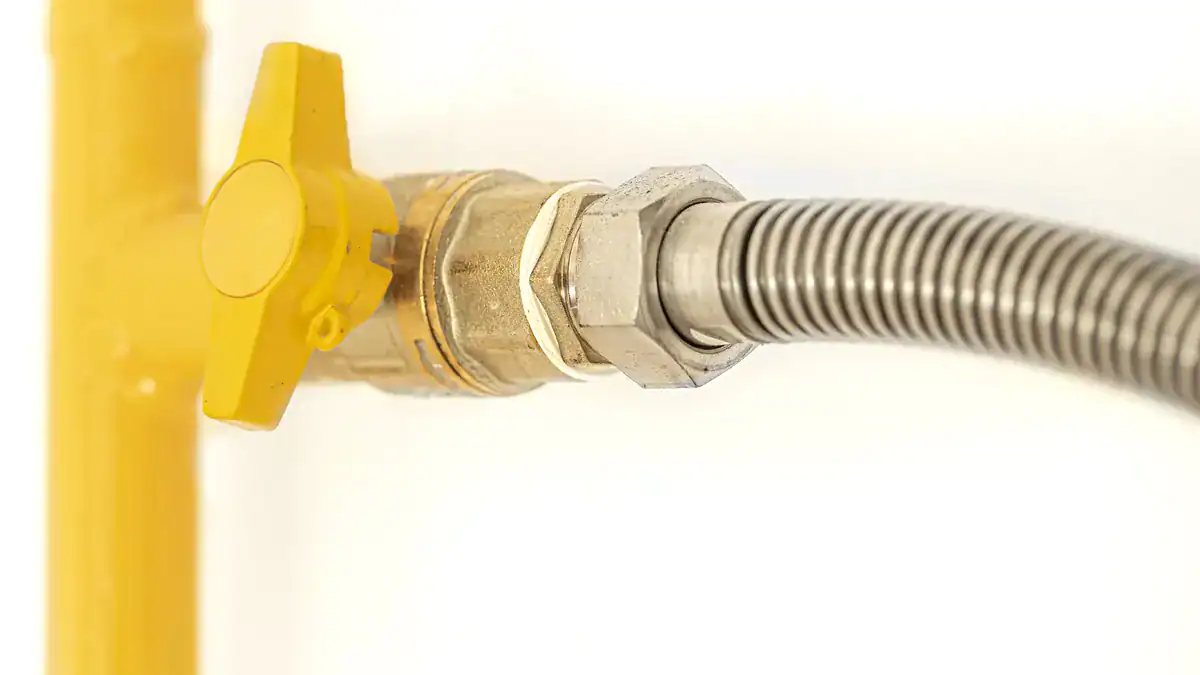
- Make sure the gas isolation valve under the heater is open, with the handle in line with the pipe.
- Check the valve at the gas meter or, for bottled gas, that the cylinder isn’t empty.
- Try the cooktop or another gas appliance to see whether gas is reaching the house.
If you smell gas at any point, stop the checks straight away. Jemena advises removing or turning off ignition sources and leaving the area, then calling its gas emergency line on 131 909, or 000 if anyone is in danger.
Reset and still no hot water?
When the code keeps coming back, the heater is telling you something a reset cannot fix. On our Sydney call-outs, a few causes turn up far more often than the rest.
- An outdoor power point that tripped or was switched off during other work.
- A gas valve left part-closed after a meter change or cooktop install.
- Shrubs, stored bins or a new fence crowding the flue outlet.
- Scale or debris in the inlet water filter, which reduces flow.
- A worn fan, sensor or circuit board on an older unit.
The first three you can often spot yourself, and Rinnai asks owners to keep plants well clear of the flue. Filter cleaning and every part inside the case belong with a service technician, because the manual lists them as service calls.
Water leaking from the case is a different problem, and no reset will fix it. If you can reach it safely, close the cold water isolation valve under the heater and keep the area dry until a plumber arrives.
For repairs on a Rinnai continuous flow unit across Sydney, our gas hot water systems service handles diagnosis, parts and replacement. Have the model and serial number ready from the data plate on the left side of the heater.
What you can do and what needs a gasfitter
The line between a safe check and licensed work is clearer than it looks. In NSW, NSW Fair Trading states that only licensed gasfitters can carry out repairs involving gas.
| Safe for you to do | Licensed work |
|---|---|
| Reset from the controller or power point | Opening the cover or replacing any internal part |
| Open a closed gas isolation valve | Any work on gas pipes, the regulator or the gas connection |
| Clear plants and clutter from the flue | Repairing or moving the flue itself |
| Change the set temperature or priority | Changing factory maximum temperatures or tempering devices |
| Clean showerheads and tap aerators | Cleaning the inlet filter or descaling the heat exchanger |
Based on NSW Government guidance on gasfitting and the Rinnai Infinity manual.
Rinnai recommends a service every 2 years, and regular servicing catches worn parts before they leave you without hot water. Faults caused by poor gas or water supply, or by operation errors, are not covered by Rinnai’s warranty, which is another reason to keep the service record.
Age matters as well, because a unit that needs parts every winter may be close to the end of its working life. Our guide to how long hot water units last covers the signs that repair no longer makes sense.
Flue work counts as gasfitting too, under the definition the NSW Government publishes. After gas work on a network supply, the gasfitter must give you a certificate of compliance, so keep it with the heater’s paperwork.
Frequently asked questions
Does the Rinnai have a reset button?
Not a separate one on the Infinity 26 or B26. You reset it by pressing On/Off twice on the controller, or by switching the power point off for 10 seconds.
Why is my Rinnai water heater not turning on?
Most often the power point is off, a safety switch has tripped or a gas valve is closed. If those are fine and the unit still won’t start, it needs a service.
What does code 11 mean on a Rinnai Infinity 26?
Rinnai code 11 means no ignition or no gas supply. Check the gas valve at the heater and at the meter, then reset; if it returns, call a gasfitter.
What does error code 12 mean on a Rinnai Infinity 26?
Code 12 is a flame failure or low gas flow. Check the gas valves and make sure nothing is blocking the flue outlet before a reset.
Why is my Rinnai Infinity 26 not working after a reset?
When the same code comes back, a part inside the unit has failed and another reset will not change that. The Rinnai B26 manual and the Infinity manual both list those codes as service calls.
Will a reset void my Rinnai hot water warranty?
No, a reset from the controller or power point is normal use. Opening the unit or having unlicensed repairs done is what puts the warranty at risk.
When to call a plumber about your Rinnai
Call for help when a code returns after the reset order above, when you smell gas, or when water is leaking from the case. Those faults sit inside a sealed gas appliance, and in NSW they need a licensed gasfitter.
Rapid Service Plumbing’s licensed team repairs and services Rinnai continuous flow heaters across Sydney through our hot water repairs and replacements service. Tell us the code on the controller when you call, and we can usually narrow down the part before we arrive.
This guide is general information. Plumbing, drainage and gas work in NSW must be done by a licensed tradesperson.