

You spot it one morning: a brown ring on the ceiling, maybe a patch of bubbling paint, maybe something that wasn’t there last week.
Your first question is the same one almost every homeowner asks: is that coming from the roof, or from a pipe?
It matters. Call a roofer when the problem is actually a burst pipe upstairs, and you’ve wasted time and money. Call a plumber when the roof flashing has failed, and the leak keeps going. Getting the diagnosis right first is what protects your ceiling, your walls, your insurance claim, and your wallet.
Where on the Ceiling Is the Stain?
Location is your first clue, and it’s often the most reliable one.
Stains Near External Walls or the Roofline
If the water mark is close to an external wall, a corner where the wall meets the ceiling, or directly beneath a skylight, chimney, or vent stack a roof leak becomes the more likely cause.
Water entering through damaged flashing, cracked tiles, or blocked gutters tends to follow the roofline before it drops.
Stains Beneath a Bathroom, Kitchen, or Laundry
If there’s a wet area on the floor above and the stain sits roughly underneath it, your pipes are a prime suspect.
Drain seals, toilet wax rings, supply line joints, and shower pan edges are all common failure points that can send water downward with no obvious sign upstairs.
Stains in the Middle of the Ceiling
This one’s trickier, as a central ceiling stain could be either.
Water travels along rafters, pipes, and beams before it drips, so the visible stain might be a metre or more from the actual source. Don’t assume the entry point is directly above the mark.
The Fastest Way to Tell: The Rain Test vs The Fixture Test
Here’s the most practical diagnostic most homeowners skip and it takes less than ten minutes.
The Rain Test
Roof leaks are weather-dependent by definition. If the stain only appears or grows after rain, and stays dry during dry weather, that’s a strong indicator the water is coming in from outside.
Check whether there’s been rain in the 24–48 hours before you noticed the stain. If yes, and it’s near a roofline or external wall, start looking upward.
The Fixture Test
Plumbing leaks don’t care about the weather. Run a specific fixture (the shower directly above the stain, the toilet on the upper floor, the bathroom sink) then check the ceiling underneath within 20–30 minutes.
Fresh dampness appearing shortly after running a fixture is a reliable sign of a pipe or drain issue rather than a roof problem.
The Water Meter Test
This one is worth doing before you call anyone:
- Turn off every tap and appliance in the house
- Go to your water meter and check if the dial is still moving
- If it is, there’s a pressurised supply line leaking somewhere, and that’s a plumbing issue, not a roofing one
It also gives a professional useful information the moment they arrive. RACV’s DIY leak detection guide covers additional checks worth running before you call a tradie.
How to Read the Stain Itself
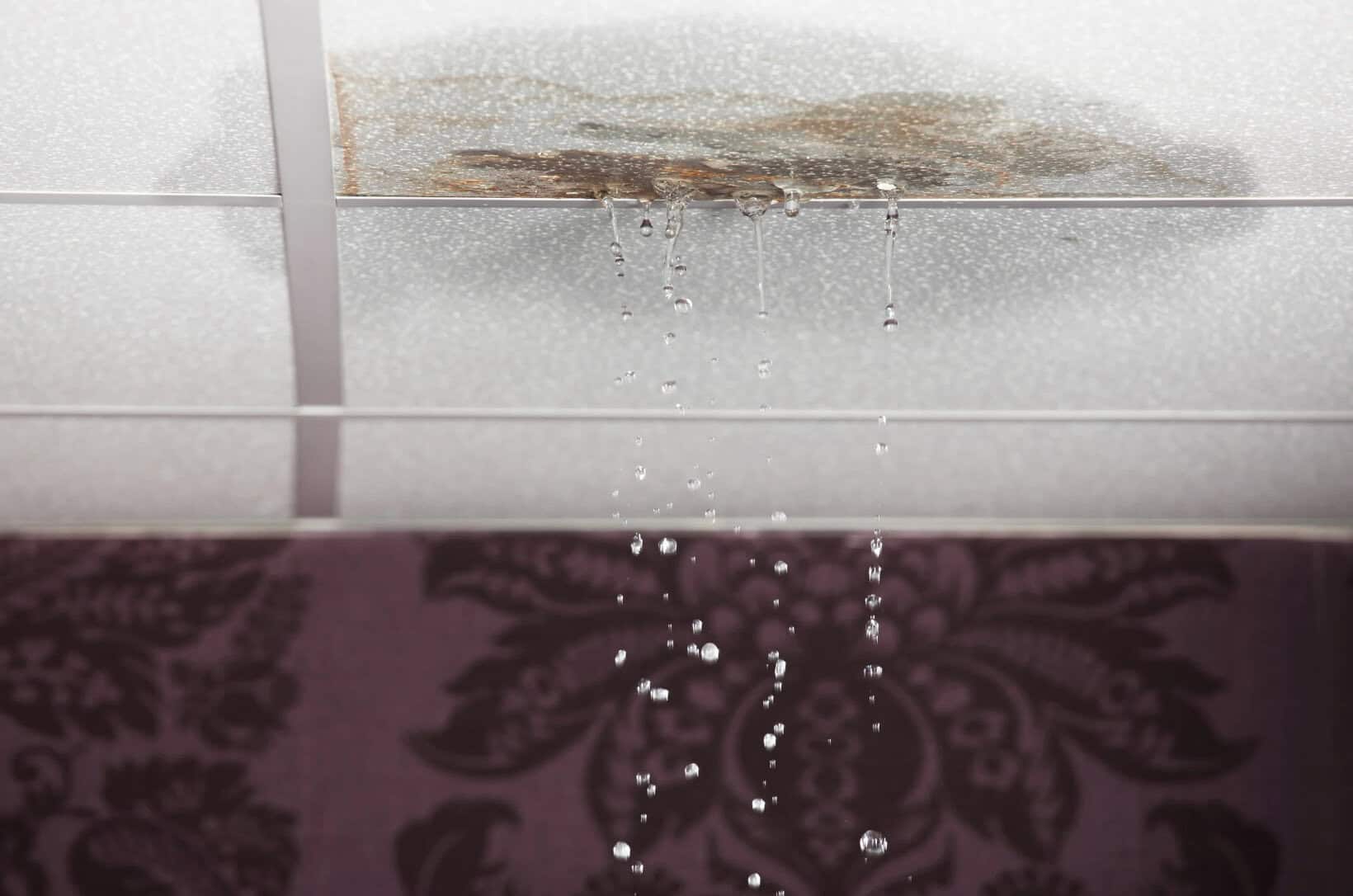
The appearance of the water mark can tell you quite a bit.
Roof leak stains tend to have irregular, spreading edges: that classic brown or yellowish coffee-ring shape that grows after rain. The stain may be accompanied by soft or sagging plasterboard, and the ceiling might feel slightly spongy if you press it gently (only do this if it’s safe).
Plumbing leak stains are often more defined and consistent in shape, since the water source is more localised. A stain that feels damp even in dry weather, or has warmth to the area above it (a possible hot water line), points toward pipes. A musty smell with no connection to weather is another flag.
Condensation stains can mimic both. Steam from showers and cooking can accumulate in ceiling cavities where ventilation is poor. Condensation-related dampness tends to appear as a broad, diffuse patch rather than a defined stain and it’s usually worst in winter.
Could It Be Condensation, Not a Leak at All?
It gets misdiagnosed often, so it’s worth checking.
Condensation forms when warm, moist air contacts a cooler surface, and in an enclosed ceiling cavity, that can produce enough moisture to cause visible staining without any pipe or roof failure at all.
Signs condensation might be the cause:
- Moisture appears broadly across a ceiling section, not at one concentrated point
- Dampness is worst in winter or during heavy shower use
- No visible damage to the roof or any pipe system above
Improving ventilation through ceiling vents, exhaust fans, or better attic airflow is usually the fix, not a roofer or a plumber. That said, if you’re not certain, get a professional to check. Condensation left unaddressed can still lead to mould growth and long-term structural damage.
Who Should You Call First: A Plumber or a Roofer?
This depends on what your tests revealed.
Call a plumber first if:
- The stain worsens after running specific fixtures (toilet, shower, washing machine)
- The water meter moves with all fixtures off
- The stain sits directly beneath a bathroom, kitchen, or laundry room
- The moisture appears regardless of weather
- There’s a warm patch near the stain (possible hot water line)
- You can hear water movement inside a wall or ceiling
Call a roofer first if:
- The stain only appears or grows after rain
- The location is near an external wall, roofline, skylight, or chimney
- You can see missing, cracked, or displaced roof tiles from the ground
- Gutters or downpipes have been overflowing onto the roofline
- The home is single-storey (no pipes above the ceiling)
Still not sure? RSP’s Sydney roof plumbers handle both sides of this problem. Roof plumbers deal specifically with water management systems (gutters, downpipes, flashing, and roof drainage) so one call can often cover both possibilities without needing two separate tradies.
What to Do Right Now If Your Ceiling Is Leaking
Don’t wait for the inspection before you act.
- Move valuables and furniture out from underneath the stain. Lay down towels or a bucket to catch any drips.
- Don’t pierce the ceiling. If the plasterboard is bulging, it’s holding pooled water. Piercing it yourself can cause a sudden, much larger release. Leave this to a professional.
- Take timestamped photos of the stain’s current size and location. These are important evidence if you need to make an insurance claim.
- Check the water meter. If it’s moving with all fixtures off, shut off your main water supply to limit damage while you wait for a plumber.
- Check the attic or roof space if it’s safely accessible. Look for wet insulation, water trails along rafters, or mould patches. Don’t go up in wet or windy conditions.
If you’re dealing with an active drip or a rapidly spreading stain, treat it as an active leak emergency and get a professional out the same day.
Speed matters here more than most homeowners realise. The longer moisture sits inside ceiling cavities, the more it works its way into insulation, timber framing, and wiring.
Mould can establish itself in wet or moist areas that lack adequate ventilation, and once it takes hold, remediation becomes significantly more involved. NSW Health’s mould fact sheet outlines the health risks and explains why prompt drying and repair is so important.
Does Insurance Cover Ceiling Water Damage? Roof vs Plumbing
Australian home insurance policies generally cover water damage that is sudden and accidental, but the rules differ depending on the cause.
Storm-related roof leaks are typically covered, provided the roof was reasonably maintained and the damage resulted from a specific weather event. If there’s evidence the roof was already in poor condition, insurers may dispute the claim on maintenance grounds.
Sudden plumbing failures (a burst pipe, a failed seal, a cracked joint) are usually covered too. The key word is sudden. A slow leak that’s been seeping for months, producing a large stain and significant mould, may be categorised as a maintenance failure and excluded.
What this means in practice: getting a professional assessment that clearly identifies the cause, and documents when the failure likely began, matters before you lodge. A plumber’s report stating a pipe joint failed suddenly is very different from a report suggesting long-term seepage.
Our home insurance and hidden leaks guide covers this in detail and is worth reading before you call your insurer. In the meantime, document everything photos, dates, professional quotes, and any emergency work you’ve done.
What a Plumber Checks vs What a Roofer Checks
Understanding what each trade actually does on arrival helps you ask the right questions and avoid paying for the wrong inspection.
What a Plumber Checks
- Isolates individual fixtures to see if activating them correlates with fresh moisture at the stain
- Inspects supply line connections, drain waste, and overflow points above the stain
- Checks the water meter for hidden supply leaks
- Uses moisture meters or thermal imaging to locate hidden wet areas without opening the ceiling unnecessarily
If a pipe issue is confirmed, they can often diagnose and repair it in a single visit. For leaks inside a wall cavity, they may recommend a camera drain inspection for a more targeted look.
What a Roofer Checks
- Inspects the external roof surface for damaged, cracked, or missing tiles
- Checks flashing integrity around chimneys, skylights, and vents
- Clears and inspects gutters and downpipes for blockages or overflow
- Checks the roof cavity for signs of water entry or wet insulation
One area of overlap worth knowing: plumbing vent pipes pass through the roof, and if the rubber boot seal around those pipes deteriorates, water can enter around the pipe penetration. This is a roof plumbing issue, and one of the more common causes of ceiling stains that gets misidentified as purely a roof or plumbing problem, when it’s technically both.
Don’t Ignore the Stain
A ceiling water stain is never just cosmetic.
Behind the plasterboard, water may have already reached insulation, timber framing, and electrical wiring. What looks like a small brown ring can represent weeks or months of slow water intrusion, and the longer it’s left, the more the repair bill grows.
If you’ve caught it early, that’s good news. Leaks addressed promptly are almost always significantly cheaper to fix our guide on what causes pipes to fail explains the warning signs worth watching for before a small drip becomes structural damage.
Run your tests. Take your photos. And if you’re not sure, or the stain is growing fast, get a professional in sooner rather than later.
RSP Can Help With Both Sides of This Problem
Rapid Service Plumbing handles roof plumbing repairs and general plumbing diagnostics across Sydney, and we’re available 24/7 for urgent situations.
Whether the stain turns out to be a failed pipe joint or a damaged section of roof flashing, our team can identify the source and walk you through the repair options. Contact us today for a free quote or an urgent inspection.
Key Takeaways
- Location matters: stains near external walls and rooflines suggest roof issues; stains beneath wet areas suggest plumbing
- Timing is your best diagnostic: stains that worsen in rain point to the roof; stains that worsen after specific fixture use point to pipes
- The water meter test is a quick DIY check: if it moves with all fixtures off, you likely have a pipe leak
- Condensation can mimic both types of leak and is often caused by poor ventilation, not a structural failure
- Insurance cover depends on whether damage is sudden (usually covered) or gradual and maintenance-related (often not)
- Call a roof plumber if you’re unsure, as they can often diagnose across both roof and plumbing systems in one visit
- Act quickly: mould can begin growing within 24–48 hours on wet materials
Rapid Service Plumbing is a licensed Sydney roof plumber and general plumbing service available 24/7 for emergency repairs and inspections.