

Blocked toilets and slow-draining sinks have a way of showing up at the worst possible moment. The good news is that most of us already own the tool that fixes them: a plunger. It’s cheap, it’s already under the sink, and it clears the vast majority of everyday clogs on its own. The catch is that a lot of people are using the wrong plunger, the wrong technique, or both.
Here’s how a plunger actually works, which type suits which fixture, the correct technique for toilets and sinks, common mistakes to avoid, and what to do if you don’t own one at all.
How Does a Plunger Work?
A plunger doesn’t really “suck” anything. What’s actually happening is air pressure. When you push the plunger down over a drain, you force air and water out from under the cup. As you pull back, a low-pressure area forms underneath it, and the higher pressure in the surrounding air and water pushes back against the clog from the other side. Push and pull enough times with a good seal, and that back-and-forth pressure is usually enough to break the blockage loose. If you want the fuller physics explanation, the University of Minnesota’s Physics Force has a nice breakdown of how air pressure creates suction.
Cup Plunger vs Flange Plunger
Not every plunger is built the same, and using the wrong one is one of the biggest reasons plunging fails. A plunger also only helps with a blockage, so if the water isn’t rising and the toilet still won’t flush, our guide to why a toilet won’t flush explains what to check instead.
| Cup Plunger | Flange Plunger | |
| Shape | Simple rubber dome | Dome with a folding rubber flap (flange) |
| Best for | Sinks, tubs, showers, flat drains | Toilets |
| Why it works | Seals flat surfaces well | Flange fits inside the curved toilet drain for a tighter seal |
| Use on a toilet? | Not recommended, weak seal | Yes, this is what it’s designed for |
Cup Plunger
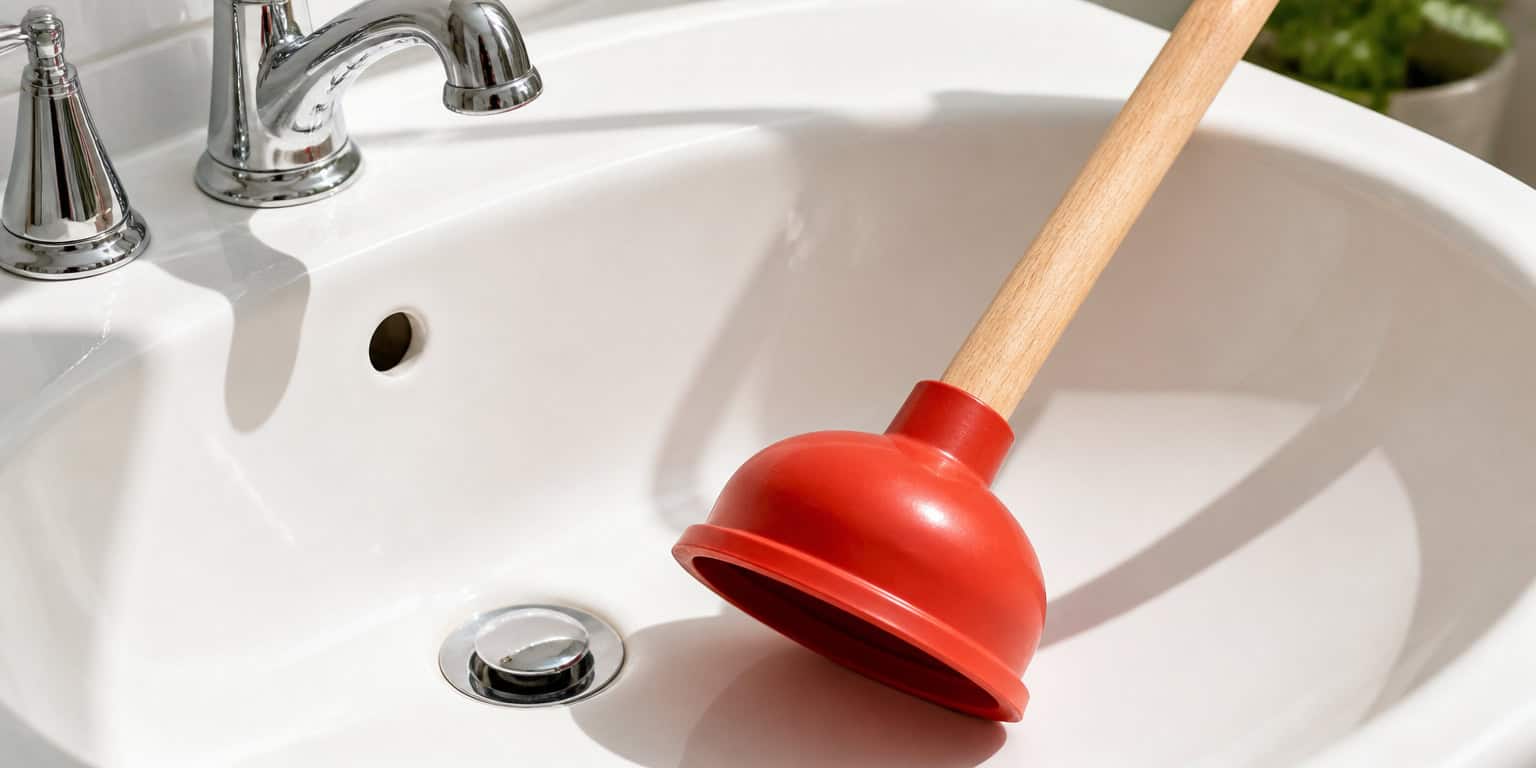
The cup plunger is the classic dome-shaped design most people picture first. It works well on flat surfaces like bathroom and kitchen sinks, bathtubs, and shower drains, where its rubber rim can form a solid seal against a smooth opening.
Flange Plunger
A flange plunger has an extra rubber flap that folds out from inside the cup. That flap tucks into a toilet’s curved drain opening, forming a much tighter seal than a cup plunger can manage on a rounded bowl. If you’re only going to own one plunger, this is the one worth having, since the flange folds back in to double as a cup plunger on flat drains too.
How to Use a Toilet Plunger
- Check the water level. The plunger cup needs to be submerged, so add water if the bowl is low, or scoop some out with a container if it’s close to overflowing.
- Insert at an angle. Tilting the plunger slightly as you lower it lets trapped air escape from inside the cup before you start.
- Seal and push gently first. Once the flange is seated in the drain, push down gently on the first stroke to force out any remaining air. Pushing hard straight away can just blast water back out of the bowl.
- Plunge with firm, steady strokes. Push and pull with even pressure for around 15 to 20 seconds. The pull matters as much as the push, since it’s what draws the clog back the other way.
- Check and repeat. Lift the plunger and see if the water starts draining. If it does, flush to confirm. If not, reposition and go again. Bunnings’ own guide on unblocking a toilet walks through much the same process if you want a visual reference.
How to Use a Cup Plunger on a Sink or Tub
- Cover the overflow hole. Sinks and tubs often have a small overflow slit near the top. Block it with a wet cloth so the plunger’s pressure doesn’t just escape through there instead of down the drain.
- Add water. Fill the sink or tub with a few centimetres of water, enough to fully cover the plunger cup.
- Roll it on, don’t slam it down. Placing the plunger straight down traps air underneath. Instead, tilt it and roll it onto the drain so air can escape as the seal forms.
- Plunge firmly. Push and pull with quick, deliberate strokes for about 20 seconds, keeping the handle vertical the whole time.
- Test the drain. Run water to see if it clears. Our guide on unblocking a sink drain has a few extra tricks if plunging alone doesn’t finish the job.
Common Plunging Mistakes to Avoid
- Using a cup plunger on a toilet. It won’t form a proper seal on the curved bowl, so most of your effort goes to waste.
- Leaving too much air in the cup. Air compresses, water doesn’t. A cup full of air just cushions your strokes instead of transferring force to the clog.
- Tilting the handle. Keep it vertical. Tilting breaks the seal and reduces the pressure you’re generating.
- Flushing while plunging. This interrupts the seal and can cause an overflow. Always lift the plunger and check first.
- Giving up after one attempt. Most clogs need several rounds of firm, steady strokes before they budge.
No Plunger? A Makeshift Option
If you’re caught without one, a plastic bottle with the bottom cut off can work in a pinch. Take the cap off, cut the base away, and press the open end firmly over the drain to create a rough seal, then push and pull much like you would with a real plunger. It’s not as effective and won’t replace a proper flange plunger on a toilet, but it can buy you time. For a toilet specifically, our guide to unclogging a toilet without a plunger covers a few more panic-free options.
When to Stop Plunging and Call a Plumber
Plunging is a first line of defence, not a guaranteed fix. It’s time to call a plumber if:
- The clog doesn’t budge after two or three solid attempts
- Water backs up in a different fixture when you flush or run a tap
- The blockage keeps coming back within days or weeks
- You suspect the problem sits further down the line, which is where a drain snake or professional inspection tends to do a better job than repeated plunging.
Key Takeaways
- Use a flange plunger for toilets and a cup plunger for sinks, tubs and showers
- Submerge the cup fully, push gently first to clear trapped air, then plunge with firm, steady strokes
- Keep the handle vertical and never flush while you’re mid-plunge
- If it’s not working after a few solid attempts, it’s time to call a plumber rather than keep forcing it
If your drains keep clogging no matter what you try, get in touch with Rapid Service Plumbing and we’ll sort out what’s really going on.