

A French drain isn’t one that plays “La Marseillaise” when you hit the flush button. But if you’re struggling with drainage in your yard, a French drain system might very well be the easiest and most beautiful solution.
Originally developed as a farm drainage technique to manage water runoff and soil moisture, the French drain has evolved into a modern solution for efficient water management in both residential and commercial properties.
What is a French Drain?
A French drain is a type of drainage system designed to collect and redirect surface water and groundwater away from a specific area, such as a building foundation or a low-lying area of a yard. French drains are commonly used to prevent ground and surface water from damaging building foundations. The primary purpose of a French drain is to prevent water accumulation and damage to structures, landscaping, and surrounding soil. By redirecting water away from problem areas, French drains help to maintain proper drainage, prevent soil erosion, and reduce the risk of water damage.
To understand how french drains work, it’s important to know their structure and function. At its core, a French drain consists of a sloping trench that includes a gravel layer and a drainage pipe, typically a perforated pipe, which are key components of the system. The gravel layer supports the filter fabric, prevents sediment clogging, and provides a stable base for the pipe. Water enters the trench through the gravel and then flows into the perforated pipe, which carries it away from the problem area. This setup efficiently creates a drainage pathway that redirects water away from your property to a designated discharge point.
Signs You Need a French Drain

Not sure if a French drain is the right solution for your property? Here are some telltale signs that your yard or home could benefit from improved drainage:
Visible water problems:
- Water pooling in your yard after rain, even days later
- Puddles forming near your home’s foundation
- Soggy or spongy lawn that doesn’t dry out (waterlogged lawns and persistent muddy spots are often a sign of poor soil drainage)
- Water stains or dampness on basement walls
- Musty odours in your home (indicating hidden moisture)
Waterlogged lawns indicate persistent muddy spots or soggy ground after rain, which suggests inadequate drainage and may require a French drain, especially in areas with poor soil drainage.
Landscape and structural indicators:
- Soil erosion around garden beds or pathways
- Cracks appearing in your foundation or retaining walls
- Mould or mildew growth on exterior walls
- Plants dying from waterlogged roots
- Your yard slopes toward your house rather than away
Neighbourhood factors:
- Your property sits lower than surrounding homes
- Neighbours’ runoff drains onto your land
- You’re in a flood-prone area (Blacktown, Engadine, Castle Hill, Casula and Penrith are some of the most flood-prone areas according to NRMA)
If you’re noticing several of these signs, it might be time to consider a French drain or other stormwater drainage solutions for your property.
Types of French Drains
There are several types of French drains, each with its own unique characteristics and applications.
Collector drains are integrated systems that combine features of surface and subsurface drainage. This makes them versatile solutions for managing both surface water and groundwater effectively.
Surface French Drains
Surface French drains are shallow trenches that are used to collect surface water and redirect it away from a specific area. They are often used in areas with minor water accumulation issues and are typically installed in a shallow trench, usually 30-45cm deep. Surface French drains are ideal for collecting water from roofs, sidewalks, and driveways. They are particularly effective at managing surface water runoff from these areas, helping to prevent excess water flow and potential damage.
Subsurface French Drains
Subsurface French drains are deeper and more effective for managing groundwater. They are commonly used around foundations and basements to prevent water seepage and damage. Subsurface French drains are commonly installed around the foundation wall to prevent water infiltration and protect the structural integrity of the building. These drains are typically installed in a deeper trench, usually 60-90cm deep, and are designed to capture and redirect groundwater away from the problem area.
Interior French Drains for Basements
Interior French drain systems typically include a trench dug along the basement floor perimeter, a perforated pipe placed in the trench, gravel backfill around the pipe, and a sump pump to remove collected water. The weeping tile creates an easy path for water to flow, directing it away from your foundation and into a sump pit where a pump removes it to the exterior.
Interior systems are particularly useful when exterior drainage isn’t practical due to landscaping, structures, or access issues. However, they’re generally more complex to install and may require professional assessment to ensure they meet Australian Building Code requirements for drainage.
How Does a French Drain Work?
In a nutshell, a French drain consists of a trench filled with gravel and a perforated pipe that redirects water away from problem areas. This simple but clever array uses a perforated pipe in sloping trenches with landscape fabric and decorative gravel or stone on top. Or if you prefer Henry Flagg French’s old school and innovative 19th century version, you can get away with just a rock or gravel filled trench – although it will clog more easily than the modern version.
Water naturally seeks the path of least resistance. When rain falls or groundwater rises, the water flows into the gravel-filled trench rather than saturating your soil or pooling on the surface. The perforated pipe should be surrounded by gravel and water-permeable filter fabric to facilitate water flow and prevent soil intrusion. The pipe should be installed with the holes facing downward to allow water to enter easily and maximise drainage efficiency. Once in the trench, water seeps through the gravel and enters the perforated pipe through small holes or slots. Gravity then carries the water along the sloped pipe to a discharge point – typically a street drain, stormwater system, or a lower area of your property.
French Drain vs Soakwell: Which is Right for Your Property?
When researching drainage solutions in Australia, you’ll often come across both French drains and soakwells. Understanding the difference can help you choose the right system for your situation.
| Feature | French Drain | Soakwell |
|---|---|---|
| Best for | Large areas, slopes, continuous water flow | Concentrated runoff (downpipes, driveways) |
| How it works | Collects water along its length and redirects it to a suitable discharge point, such as a storm drain or dry well, to prevent pooling and flooding | Collects water in a pit and disperses into soil |
| Installation | Trench with pipe and gravel | Underground pit/tank |
| Visibility | Can be decorative or hidden | Completely hidden |
| Maintenance | Occasional flushing and debris removal | Periodic cleaning of pit |
| Soil requirements | Works in most soil types | Requires permeable soil to disperse water |
| DIY friendly | Yes, for basic installations | Moderate – requires excavation |
When to choose a French drain:
- Your yard has widespread drainage issues
- Water pools across a large area
- You have a sloped property
- You want to protect a foundation or retaining wall
- You need to direct collected water to a storm drain or dry well to ensure proper runoff
When to choose a soakwell:
- You need to manage roof runoff from downpipes
- You have concentrated water from a driveway or patio
- Your soil is sandy or well-draining
- Space is limited
In some cases, the best solution is a combination of both – using soakwells to capture concentrated runoff and French drains to manage broader surface water issues, with collected water from French drains directed to a storm drain or dry well for efficient drainage.
French Drains vs Other Drainage Solutions
| Drainage Solution | Pros | Cons |
|---|---|---|
| French Drains | Effective for subsurface water; redirects water away from foundations | Requires excavation; can clog over time |
| Surface Drains | Visible; easy to maintain | Can be unsightly; potential tripping hazard |
| Sump Pumps | Handles large water volumes; ideal for basements | Needs electricity; can fail during power outages |
| Dry Wells | Good for permeable soil; low maintenance | Limited capacity; overwhelmed in heavy rain |
| Curtain Drains | Intercepts water before it reaches problem areas; shallower installation (~45cm) | Only effective for uphill water sources; less versatile than French drains |
Drain Pipe and Materials: What You’ll Need
When installing a French drain, the right materials make all the difference in long-term performance. At the heart of the system is a perforated pipe, which features small holes or slots that allow groundwater and surface water to enter and flow along the trench. This pipe is surrounded by gravel or crushed stone, which facilitates water flow and prevents soil from clogging the system. To keep soil from intruding into the gravel and pipe, the trench is lined with landscape fabric or filter fabric. This porous material allows water to pass through while blocking soil particles, helping maintain the system’s effectiveness over time. A top layer of decorative stones not only improves appearance but also allows surface water to enter easily while protecting the underlying materials from debris.
For properties with severe water accumulation, such as around foundation walls or in areas with a high water table, subsurface French drains may be required. These systems are installed in deeper trenches and can be paired with a sump pump to actively remove water, providing an extra layer of protection against flooding. When selecting materials for your French drain, prioritise durability, water permeability, and resistance to corrosion. High-quality materials will ensure your drainage system stands up to heavy rain, stormwater runoff, and years of use.
| Component | Purpose |
|---|---|
| Perforated pipe | Allows groundwater and surface water to enter the system and flow along the trench |
| Gravel or crushed stone | Surrounds the pipe to facilitate water flow and prevent soil from clogging the system |
| Landscape/filter fabric | Lines the trench to block soil particles while allowing water to pass through |
| Decorative stone top layer | Improves appearance, allows surface water entry, and protects underlying materials |
How to Install a French Drain in 8 Easy Steps
While most plumbing and drainage work across Sydney and beyond will require the mandatory and skilled workmanship of fully-licensed Sydney plumbers and drainage specialists, installing a French drain is something you can do yourself. Here’s how:
Step 1: Prepare
The most important thing to know before you start is what’s underneath that garden surface. Identifying and avoiding underground utilities is crucial before digging to ensure safety and compliance with regulations. Hitting a pipe, electrical line or another underground cable, pipe or installation isn’t just going to mess up your and your neighbour’s place – it can be dangerous.
TIP: Try the Before You Dig Australia service at www.byda.com.au.
Step 2: Follow the Rules
Are you sure there aren’t any zoning or runoff regulations that will ruin your French drain party later on? It’s essential to check local regulations and legal requirements before installing a French drain, as these can impact your project and help you avoid potential legal issues. Another thing to check off the list is whether your proposed drain configuration won’t cause drainage issues for your neighbour, because both of these will get you in hot and expensive water.
Step 3: Find a Slope
It’s a clever drainage innovation but a French drain is still very simple and only works if gravity is on your side. Remember, the whole idea is that water will seep into your laid pipes and be carried away because of the downhill gradient, so:
- Identify the drainage area
- Start at the top
- Route your downhill drainage path with a slight slope to ensure proper water flow
- End the drain where you want the water to go
To ensure proper water flow, the trench for a French drain should have a minimum downward slope of 1 percent to allow gravity to move water efficiently. If your land is flat as a pancake, you’ll need to create your own slope by digging shallowest at one end and deeper at the other end with at least a 1-2% grade.
Step 4: Dig the Trench
You’ll need it about 30cm wide and 50cm deep. Make sure you don’t disturb the natural slope of the land with a poorly dug trench.
For clay-heavy Sydney soils, consider going a bit deeper (up to 60cm) to ensure adequate drainage capacity.
Step 5: Line It
Your French drain will be lined with fabric – but it needs to be fully water-permeable. We recommend genuine landscape fabric (geotextile) which is designed for this purpose and is installed by:
- Rolling it out over the trench
- Leaving a 30cm overlap on both sides
- Tamping down to fill the gaps
- Securing it in place
Step 6: Add the Gravel
Now pour a 5-10cm layer of gravel on top of the fabric. Use drainage-grade gravel (10-20mm) rather than fine material that could impede water flow.
Step 7: Add the Pipe
Any drain pipe will do but PVC will last the longest and work the best. It will need to have holes or perforations to do the drainage work, and it is important to install the perforated pipe with the holes facing downward to allow water to enter easily. Then cover the whole thing with another thin layer of gravel to within 5-10cm of the top of the trench.
Step 8: Done
Fold the remaining fabric over the gravel and cover it all in soil. You can then finish off the look however you like – grass or just decorative stones.
It is crucial to ensure that the collected water from your French drain is directed to a safe discharge point, well away from structures and property boundaries, to prevent pooling and flooding.
Once installed, your French drain may connect to your existing stormwater system. If you’re unsure about the requirements, our guide on connecting downpipes to stormwater explains what’s compulsory in NSW.
Installing French Drains Behind Retaining Walls
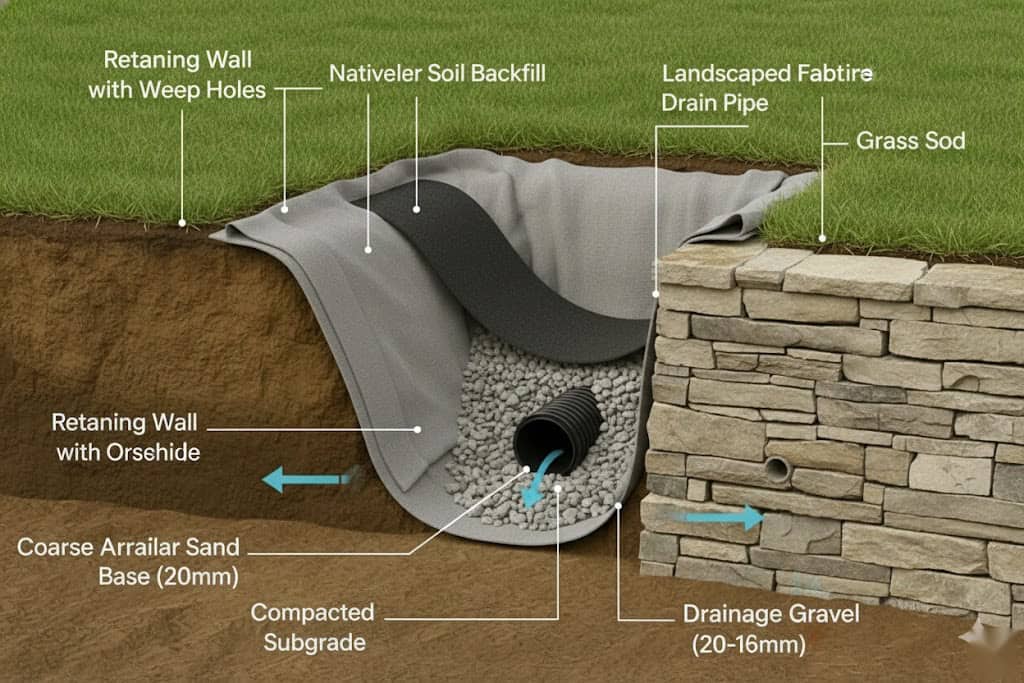
Retaining walls are particularly vulnerable to water damage. Hydrostatic pressure – the force of water building up behind the wall – is one of the leading causes of retaining wall failure. A French drain installed behind a retaining wall can relieve this pressure and significantly extend the wall’s lifespan.
Key considerations for retaining wall drainage:
- Install the drain at the base of the wall, behind the structure
- Ensure adequate slope to carry water away
- Use coarse gravel (20mm+) for better water flow
- Consider a drainage board between the wall and soil for added protection
- Check NSW Fair Trading guidelines for retaining wall requirements in your area
If your retaining wall is showing signs of water damage – bulging, cracking, or leaning – it’s worth having a professional assess whether drainage improvements could help before more serious structural issues develop.
French Drain Essentials
Get these before you start:
- Drainage pipe (perforated PVC or corrugated) – a key component for redirecting water in the French drain system; 100mm diameter is standard for residential use
- Landscape fabric (geotextile)
- Gravel or crushed stone (10-20mm drainage grade)
- Sand (for bedding)
- Topsoil (for finishing)
- Digging tools (shovel, pickaxe etc.)
- Level or laser level
- Tape measure
- Safety equipment (gloves, safety glasses)
Do You Need Council Approval for a French Drain?
In most cases, you won’t need council approval for a basic French drain on your own property – but there are important exceptions.
You generally DON’T need approval for:
- French drains that discharge onto your own property
- Systems that connect to existing private stormwater infrastructure
- Basic surface drainage in garden areas
You MAY need approval for:
- Drains that connect to council stormwater systems
- Systems that redirect water toward neighbouring properties
- Drainage work in heritage areas or flood zones
- Large-scale drainage projects
Always check with your local council before starting work, especially if you’re in a flood-prone area or your property has specific planning restrictions. Sydney Water also has requirements for stormwater connections that may apply to your project.
French Drain Maintenance
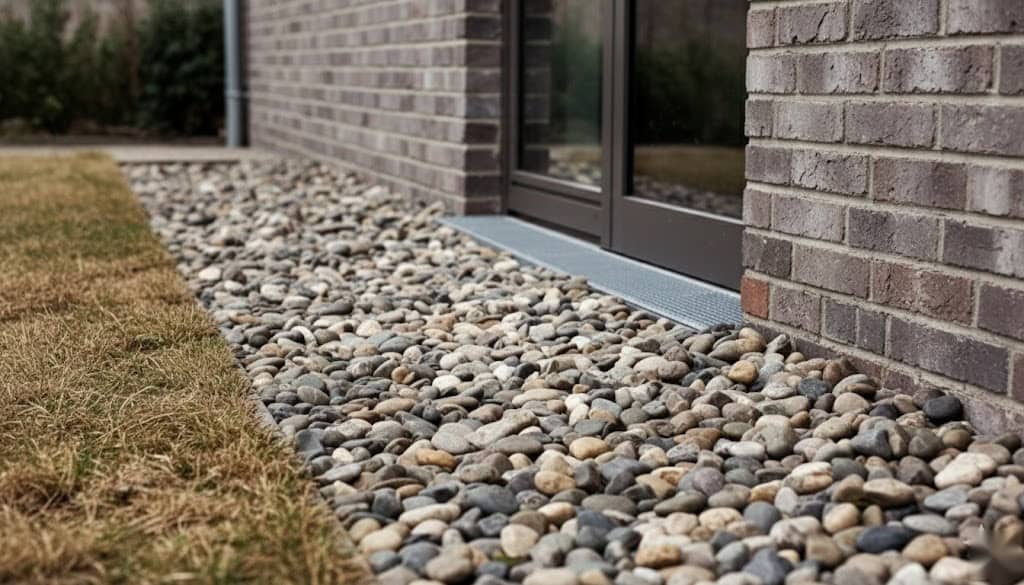
Maintenance will keep your French drain working for years to come:
- Regular maintenance: Regular maintenance of a French drain is essential to prevent blockages and ensure optimal performance.
- Annual inspection: Inspect the French drain annually, especially before the rainy season, to clear debris and check for proper water flow.
- Check-up: Inspect for clogging or damage at least twice a year, and check the outlet point to ensure it is clear of obstructions that could impede water flow.
- Debris removal: Clear leaves, twigs, and any debris from the surface of the drain, including surface grates and catch basins, to maintain effectiveness.
- Flushing: Flush the system with water every now and then to clear sediment.
- Landscape maintenance: Trim nearby plants to prevent roots from entering the drain.
- Grate cleaning: If your drain has a grate, clean it regularly to allow water to flow.
- Professional cleaning: Consider hiring a professional to perform a thorough cleaning of the French drain every few years to clear stubborn clogs.
Regular inspection and maintenance also help prevent soil intrusion, which can clog the system and reduce its effectiveness.
Regular gutter cleaning also helps reduce debris entering your drainage system, as leaves and sediment from gutters can eventually find their way into French drains.
French Drain Problems and Solutions
Even well-installed French drains can have issues. Here are common problems and fixes:
Clogging: If water isn’t draining, the pipe may be clogged. Flush the system or use a plumber’s snake to clear blockages. For stubborn clogs, CCTV drain inspection can identify exactly where the problem lies.
Surface water pooling: This could mean the drain is overwhelmed or not sloped correctly. Add more drainage capacity or adjust the slope.
Erosion around the drain: Add more gravel or adjust landscaping to prevent soil erosion.
Foul odours: This indicates standing water or organic matter buildup. Flush the system and check the slope is adequate.
Frost heave: In colder areas of NSW, ensure the drain is installed below the frost line to prevent damage from freezing.
Root intrusion: Tree roots seeking moisture can infiltrate your drainage system. For severe cases, pipe relining may be a cost-effective repair solution.
If your French drain becomes completely blocked and you’re unable to clear it yourself, you may need to unblock the outside drain professionally or consider replacing damaged sections.
Advanced French Drain Techniques
For more complex drainage issues, consider these advanced options. Modern innovations such as dual pipe systems and smart sensors contribute to efficient water management by optimizing water flow and reducing maintenance:
Dual pipe systems: A second pipe provides extra drainage capacity in areas with heavy rainfall or high water tables.
Sump pump integration: Combining a French drain with a sump pump works well for basements or areas below the water table where gravity drainage isn’t possible.
Geotextile wrapping: Wrapping the entire drain assembly (pipe and gravel) in geotextile fabric provides extra filtration and extends system life.
Cleanout ports: Installing access points at key locations makes maintenance and cleaning much easier – a worthwhile addition for longer drain runs.
Bioswale integration: French drains combined with bioswales provide natural filtration through planted areas, supporting sustainable water management.
Eco-Friendly French Drain Options
If you’re environmentally conscious, there are several ways to make your French drain more sustainable:
Recycled materials: Look for drainage pipes made from recycled plastics and consider recycled aggregate for your gravel fill.
Permeable pipe options: Some modern drainage pipes allow for more even water distribution along the trench, reducing concentrated discharge.
Rain garden integration: Instead of simply discharging water, direct your French drain to a rain garden – a shallow planted depression that filters and absorbs stormwater naturally.
Rainwater capture: Consider directing clean roof runoff to a rainwater tank before overflow enters your French drain system. This provides free irrigation water while reducing the load on your drainage.
Need Help with Your French Drain?
Every time it rains and pours across Sydney, we’re all reminded about the importance of good, professional stormwater drainage solutions that protect your home, family, garden, investments – and sanity!
Blacktown, Engadine, Castle Hill, Casula and Penrith are some of the most flood prone areas according to NRMA but nowhere is immune. If you want to put your French drains in the best possible hands give Sydney’s friendliest drainage experts here at Rapid Service Plumbing a call.
If you want to put your French drains in the best possible hands, give Sydney’s friendliest drainage experts here at Rapid Service Plumbing a call.
Key Takeaways
- A French drain consists of a trench filled with gravel and a perforated pipe that redirects water away from problem areas
- Modern French drain systems contribute to efficient water management by optimizing water flow and reducing maintenance
- Signs you need a French drain include water pooling, soggy lawns, foundation dampness, and erosion
- Sydney’s clay-heavy soils make French drains particularly valuable but may require deeper trenches
- French drains can last 20-30 years with proper installation and maintenance
- DIY installation is possible for simple projects, but complex situations benefit from professional expertise
- Consider combining French drains with soakwells, rain gardens, or rainwater harvesting for comprehensive water management
- Regular maintenance (twice-yearly inspections and flushing) keeps your system working effectively