
Rheem hot water system not working? The cause is usually simple: the power to an electric unit is off or on an off-peak timer, the pilot on a gas storage unit has gone out, the gas is off, or a continuous flow unit is showing an error code, so check those first.
Below are the safe checks in order, the differences between Rheem’s electric, gas, continuous flow, solar and heat pump units, what the common error codes mean, and the point where a licensed plumber needs to take over. Leaks and a dripping relief valve have their own section.
Last reviewed: 8 October 2026
Rheem hot water system not working? Start here
Most no hot water calls start with something you can see from the outside of the unit. None of these checks involve taking a cover off or touching wiring, pipes or gas fittings.
- Turn on two or three hot taps in different rooms to see whether the problem is the whole house or just one tap.
- Look at your switchboard for a switch or circuit breaker marked “water heater” and check that it is on.
- Check the isolating switch on or near the unit, which can get bumped off during garden work.
- Think about timing, because a unit on an off-peak tariff may only heat during set hours.
- For gas units, check that your cooktop or other gas appliances still light.
- For a gas storage unit, look through the small viewing window near the base for the pilot flame.
- For a continuous flow unit, write down any number on the display or the remote controller.
If one tap runs cold while the rest are hot, the unit itself is probably fine. The fault is more likely a tap cartridge or the mixing valve on that fixture, which a plumber can check on the same visit.
Rheem hot water system troubleshooting by type
Rheem makes several kinds of water heater, and each one stops heating for different reasons. The sticker on the side of the unit names the model, and the table below shows where to start for each type.
| Rheem system | What usually stops it heating |
|---|---|
| Electric storage tank | Power off at the switchboard or isolating switch, off-peak hours, a failed element or thermostat Check the switches yourself; parts need a licensed tradesperson |
| Gas storage tank | Pilot gone out, gas supply off, a worn thermocouple or gas control Relight only as the unit’s label shows; gas parts need a licensed gasfitter |
| Gas continuous flow | An error code, no power to the unit, low flow from water saving fittings Note the code; repairs need a licensed gasfitter |
| Solar with booster | Booster switched off or not set up as the instructions describe, cloudy weather Check the booster switch; panel and circuit faults need a plumber |
| Heat pump | Power off, a fault light or code on the controller, blocked airflow around the unit Clear the area around it; faults need a licensed technician |
Source: Rheem Australia troubleshooting and owner’s guide information. Every installation is different.
Electric storage units
A Rheem electric hot water system not working is most often a power problem. Rheem’s own owner’s guide asks you to check the switch marked “water heater” at the switchboard, the isolating switch and the circuit breaker before booking a service call.
On an off-peak tariff, the supply may only be available at certain times of the day. A big morning of showers can empty the tank before the next heating window, so lukewarm water by evening is not always a fault.
If the water heater breaker trips again after you switch it back on, leave it off. That usually points to a failed element or wiring fault, which is a job for a licensed electrician or plumber.
Gas storage units
A Rheem gas hot water system not working has often just lost its pilot flame. Strong wind, a gas supply interruption or a worn thermocouple can all cause it.
Rheem points owners to the lighting instruction label inside the front of the water heater, and to Rheem’s gas relighting videos for each model. Follow the label exactly, and stop if the pilot will not stay lit after a couple of tries.
A pilot that keeps going out is a part failing, not bad luck. Thermocouples, gas controls and burners are gasfitting work, so book a licensed gasfitter rather than trying again and again.
Continuous flow units
Rheem’s continuous flow models only fire when enough hot water is flowing, and Rheem notes that flow restrictors and water saving low flow taps can stop the unit running, which shows up as water that turns hot and cold during a shower. If the flow is weak at every hot tap, our guide on why hot water pressure drops walks through the other causes.
These units also need power for the fan and ignition, so check the power point they plug into. Any number on the display is a fault code, and the next section explains the common ones.
Rinnai continuous flow units work in a similar way, and our Rinnai troubleshooting guide covers their codes and controller. The safety line is the same for both brands.
Solar and heat pump units
Rheem’s advice for solar is to check that the booster is being used as the installation instructions for your model describe. After a run of cloudy days, a booster switched off at the switchboard is a common reason for cool water.
Heat pumps draw heat from the surrounding air, so they need clear space around the unit. If the controller shows a fault light or code, note it before calling for a service.
If you smell gas near any gas unit, do not try to relight it. Turn off ignition sources, leave the area and report it to Jemena on 131 909 at any time, or call 000 if anyone is in danger.
Rheem water heater error codes
Rheem water heater error codes appear on the display of continuous flow units and on some controllers. The code tells a technician where to look, but it does not mean you should open the unit.
| Code | What Rheem says it means |
|---|---|
| 11 | Ignition failure at start up Check other gas appliances work, then call |
| 12 | Flame failure during operation Licensed gasfitter |
| 14 and 16 | Overheating, or outlet water temperature too high Stop using hot water and call |
| 32 | Heat exchanger thermistor open circuit Sensor fault for a technician |
| 61 | Abnormal fan speed or fan failure Technician |
| 72 | Detected false flame Licensed gasfitter |
| 80 | Gas cut off defective Turn the unit off and call a licensed gasfitter |
Source: Rheem Australia continuous flow error code list. Codes vary by model, so check your owner’s guide.
The full list is on Rheem’s troubleshooting page, along with codes for heat pump, solar and storage models. For every continuous flow code, Rheem’s own advice is to book a service call.
Resetting a Rheem hot water system
People often ask how to reset a Rheem hot water system, and the honest answer depends on the model. Rheem’s troubleshooting page does not list one general reset for owners; it points you to the “Save a Service Call” section of your owner’s guide instead.
For a gas storage unit, relighting the pilot as the label shows is the reset. For a continuous flow unit, note the code and follow your owner’s guide, because Rheem’s advice for every code is a service call.
Electric storage tanks have an over temperature cut-out with a button, but it sits behind the cover panel next to live terminals. Pressing it hides the reason it tripped, so leave it to a licensed electrician or plumber who can find the cause.
Leaks and a dripping relief valve
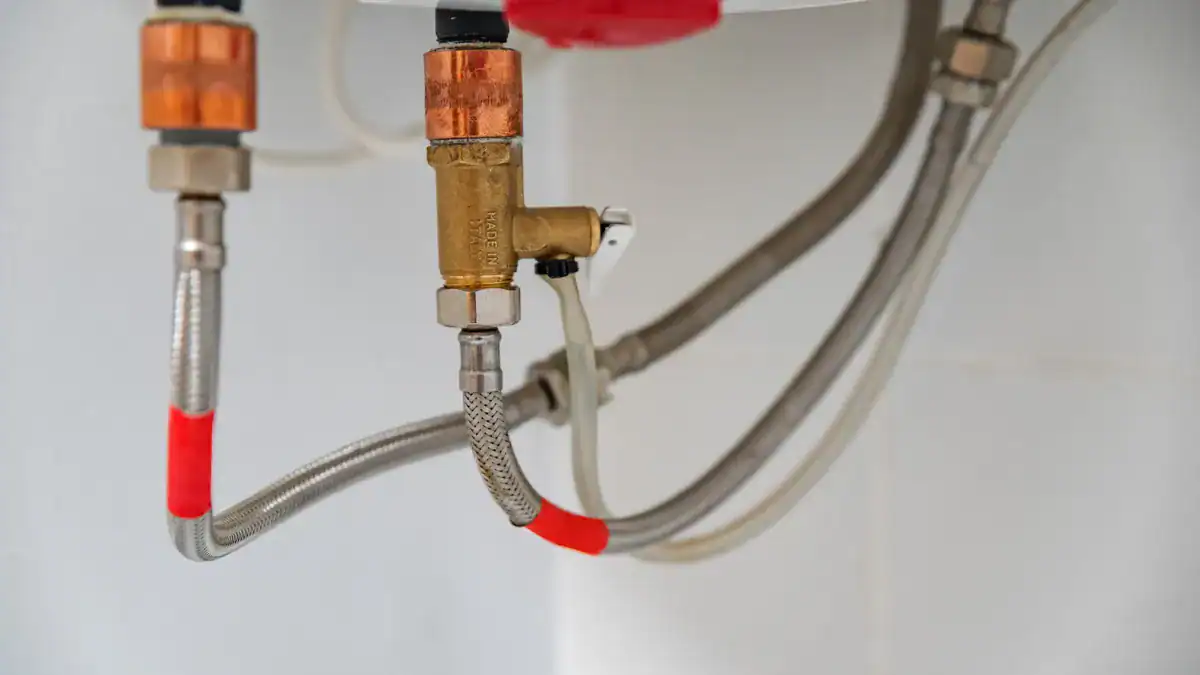
A small drip from the relief valve while the tank heats is normal. Rheem describes this discharge as “normal and desirable”, because water expands as it heats and the valve lets the extra pressure out.
Rheem’s owner’s guides give a simple rule: more than a bucket of water in 24 hours means a valve needs service. A steady flow at night can mean your mains pressure is rising above what the unit is designed for, which a pressure limiting valve fixes.
Where the water comes from tells you a lot about how serious it is. This table sums up what each leak point usually means.
| Where it leaks | What it usually means |
|---|---|
| Relief valve, small drip while heating | Normal operation Keep an eye on it |
| Relief valve, constant flow | A worn valve or high mains pressure Plumber |
| Pipe fittings on top | A loose or corroded connection Plumber, usually a repair |
| Base of the tank | Internal corrosion of the cylinder Plumber, often a new unit |
Source: Rheem owner’s guide guidance and what plumbers commonly find. Every home’s system is different.
If hot water is pouring out, turn off the electricity to the unit at the switchboard, or turn a gas unit’s control to off as its label shows. Then close the cold water isolation valve on the inlet pipe and take photos of the unit and any damage for your insurer.
Water too hot or not hot enough
Lukewarm water is not always a breakdown. Rheem says the temperature may drop after heavy hot water use, and that a faulty tempering valve can also be the cause.
Rheem says hot water needs to be stored at a minimum of 60°C, and a tempering valve then cools it for bathrooms. Our guide on adjusting a tempering valve explains what that valve does and why a plumber sets it.
Water that is suddenly much hotter than usual is a scalding risk and needs a plumber the same day. The rules on hot water temperatures in NSW cover what the delivered temperature should be.
Safe checks vs plumber jobs
Rheem’s answer to whether owners can do their own repairs is a plain no: all repairs must be made by an approved plumber. It also limits owners to the basic maintenance listed in the owner’s guide.
NSW law draws the same line. The NSW Government says you need a licence to do any plumbing, draining or gasfitting work, whatever the cost of the job.
| Safe to check yourself | Call a licensed plumber, gasfitter or electrician |
|---|---|
| Switchboard switch, breaker and isolating switch | A breaker that trips again, or anything behind a cover panel |
| Relighting the pilot as the label shows | A pilot that will not stay lit, or any smell of gas |
| Reading an error code | Any code that returns after the unit is turned off and on |
| Watching the relief valve drip | More than a bucket a day, or hot water pouring out |
| Turning off power and the cold isolation valve | Valves, elements, thermostats, anodes, gas parts and new units |
Source: Rheem Australia and the NSW Government. When in doubt, ask a licensed plumber.
Working inside the unit can also affect the manufacturer’s warranty, so check your owner’s guide before anyone opens it. When a repair is needed, our hot water repairs and replacements team works on Rheem units across Sydney.
What we find on Rheem call-outs in Sydney
Many no hot water calls turn out to be a switch rather than a broken unit. A water heater circuit left off after other electrical work is easy to miss, and the NSW electrical safety rules mean only a licensed electrician should look behind the switchboard.
Gas storage units on exposed walls can lose their pilot in strong wind, and older pilots fail more often as the thermocouple wears. On relief valve leaks, high mains pressure is a frequent cause, and a pressure limiting valve protects the whole house as well as the tank.
Repair or replace your Rheem?
The decision usually comes down to the age of the unit, where the fault is and whether it is still under warranty. A valve, element or thermostat is usually worth repairing, while a leak from the tank body itself usually is not.
Several repairs in a short time often mean the unit is near the end of its life. Our guide on the lifespan of hot water systems covers typical ages and the warning signs.
Your plumber should check the relief valve and the general condition of the tank at each service. Regular servicing by a licensed plumber is the simplest way to catch a worn part before it leaves you with cold showers.
Frequently asked questions
Why is my Rheem not getting hot?
The most common causes are power off at the switchboard or an off-peak window, a pilot that has gone out on a gas unit, or heavy use emptying the tank. If those checks are fine, a failed element, thermostat or tempering valve is likely and needs a licensed tradesperson.
How do I reset my Rheem water heater?
Follow the “Save a Service Call” section of your owner’s guide, and relight a gas pilot only as the label inside the unit shows. Do not open the cover panel to press the cut-out button, because it sits next to live terminals.
What is the first thing to check when there is no hot water?
Check whether every hot tap is affected, then check the water heater switch and breaker at the switchboard. For gas units, check that other gas appliances work and look for the pilot flame.
Where can I find the Rheem troubleshooting manual?
Rheem’s owner’s guides can be downloaded by product or model from Rheem’s help page. The model number is on the rating sticker on the side of the unit.
How long should a Rheem hot water system last?
It depends on the type of unit, your water quality and how well it has been serviced. Your owner’s guide lists the warranty, and a plumber can tell you whether a repair is worth it at your unit’s age.
What is the most common problem with Rheem water heaters?
In our experience, power and pilot problems cause most no hot water calls, followed by relief valve leaks. These are usually quick for a plumber to diagnose once the simple checks are done.
When to call a plumber for your Rheem
If the checks above have not brought the hot water back, or you see a leak, a returning code or smell gas, it is time for a licensed tradesperson. Rapid Service Plumbing repairs and replaces gas hot water systems and electric hot water systems across Sydney.
We will find the cause, explain your options and fit the right parts or a new unit if that makes more sense. Have your model number handy when you call, as it helps us bring the right parts.
This guide is general information. Plumbing, drainage and gas work in NSW must be done by a licensed tradesperson.