

You turn off every tap in the house, go outside, and watch your water meter. The dial is still moving. Something is using water, but you just can’t see where.
A spinning meter with no obvious source is one of the most frustrating plumbing problems to deal with, precisely because the damage is invisible. The leak could be under a slab, inside a wall, in your garden irrigation line, or through a slowly failing toilet seal. Whatever the cause, it’s costing you money every hour it goes unfound.
This guide covers how to systematically track down a hidden leak, what it’s likely costing you on your Sydney Water bill, how professional detection works, and how to claim Sydney Water’s Hidden Leak Allowance once it’s fixed.
Step 1: Confirm the Meter Is Actually Spinning
Before anything else, do this test properly.
- Turn off every tap, appliance, and irrigation system in your home
- Check that no one is running water anywhere, including dishwashers and washing machines on delay
- Go to your water meter and watch the small indicator dial or digital display for two to three minutes
- If the dial moves, you have a leak somewhere on the property side of the meter
Most water meters have a small red or black triangle that rotates even with very minor flow. If this is moving with everything off, you have confirmed an active leak. Take a note of the meter reading, wait an hour without using any water, and check again. The difference tells you roughly how many litres per hour are being lost.
Step 2: Check the Obvious Suspects First
Before calling a plumber, work through the common culprits. Many hidden leaks are not as hidden as they seem.
Toilets are the single most common cause of an undetected leak. A faulty cistern flapper or overflow valve can drain water continuously into the bowl without any audible sound. To test, add a few drops of food colouring to the cistern and do not flush. If colour appears in the bowl within 10 to 15 minutes without flushing, your toilet is leaking. According to Sydney Water’s water saving data, a leaking toilet can waste up to 260 litres per day.
Hot water systems with a faulty tempering valve or pressure relief valve can release water steadily through an overflow pipe outside. Check the overflow pipe near your hot water unit for any dripping or continuous flow.
Garden taps and irrigation lines are easy to miss. Walk the perimeter of your property and check all outdoor taps. Check any drip irrigation or sprinkler systems for wet patches of soil or unusually green grass above buried lines.
Flexible hoses under sinks and behind toilets are a high-failure point in Australian homes. They are one of the leading causes of internal water damage. Check underneath every sink and behind every toilet for moisture or slow dripping.
If none of these are the source, the leak is likely concealed inside a wall cavity, under a concrete slab, or in an underground supply line. This is where professional detection becomes necessary.
How Much Is a Hidden Leak Actually Costing You?
This is where most homeowners underestimate the problem.
Sydney Water bills quarterly, and with the IPART-approved price increase taking effect in October 2025, the average Sydney household now pays around $1,388 per year for water and wastewater. A hidden leak running day and night adds directly to this.
Here’s what that looks like in real terms:
| Leak type | Daily water loss | Estimated annual cost |
| Dripping tap (once per second) | ~31 litres | $30 to $50 |
| Running toilet (faulty flapper) | Up to 260 litres | $165 to $250 |
| Slow underground pipe leak (~100L/hr) | ~2,400 litres | $500 to $1,200 per quarter |
| Hot water overflow (running relief valve) | Varies | Often $200+ per quarter |
Most hidden leaks go undetected for two to four billing cycles before the bill spike prompts investigation. By that point, thousands of litres and hundreds of dollars are already gone.
The good news is that Sydney Water offers a Hidden Leak Allowance for qualifying concealed leaks. If the leak was underground, inside a wall, or otherwise not reasonably visible, and you have it repaired by a licensed plumber, Sydney Water will typically credit 50% of the water usage increase in your worst-affected quarter. You have 12 months from the repair date to submit your claim. One allowance is available per property every five years.
For more on how insurance and hidden leaks intersect, our guide to hidden water leak insurance claims covers what policies typically cover in NSW.
How Professional Leak Detection Works
If you’ve checked the obvious suspects and the meter is still spinning, a professional leak detection service is the fastest and safest way to locate the source without unnecessary demolition.
Modern leak detection uses three main tools, often in combination.
Acoustic listening devices amplify the sound of water escaping from pressurised pipes. Because pressurised water produces a distinctive frequency as it escapes through a crack or joint, trained technicians can pinpoint leak locations within 10 to 30 centimetres by moving the sensor along the surface above the pipe run. This is particularly effective for underground supply lines and pipes beneath concrete slabs.
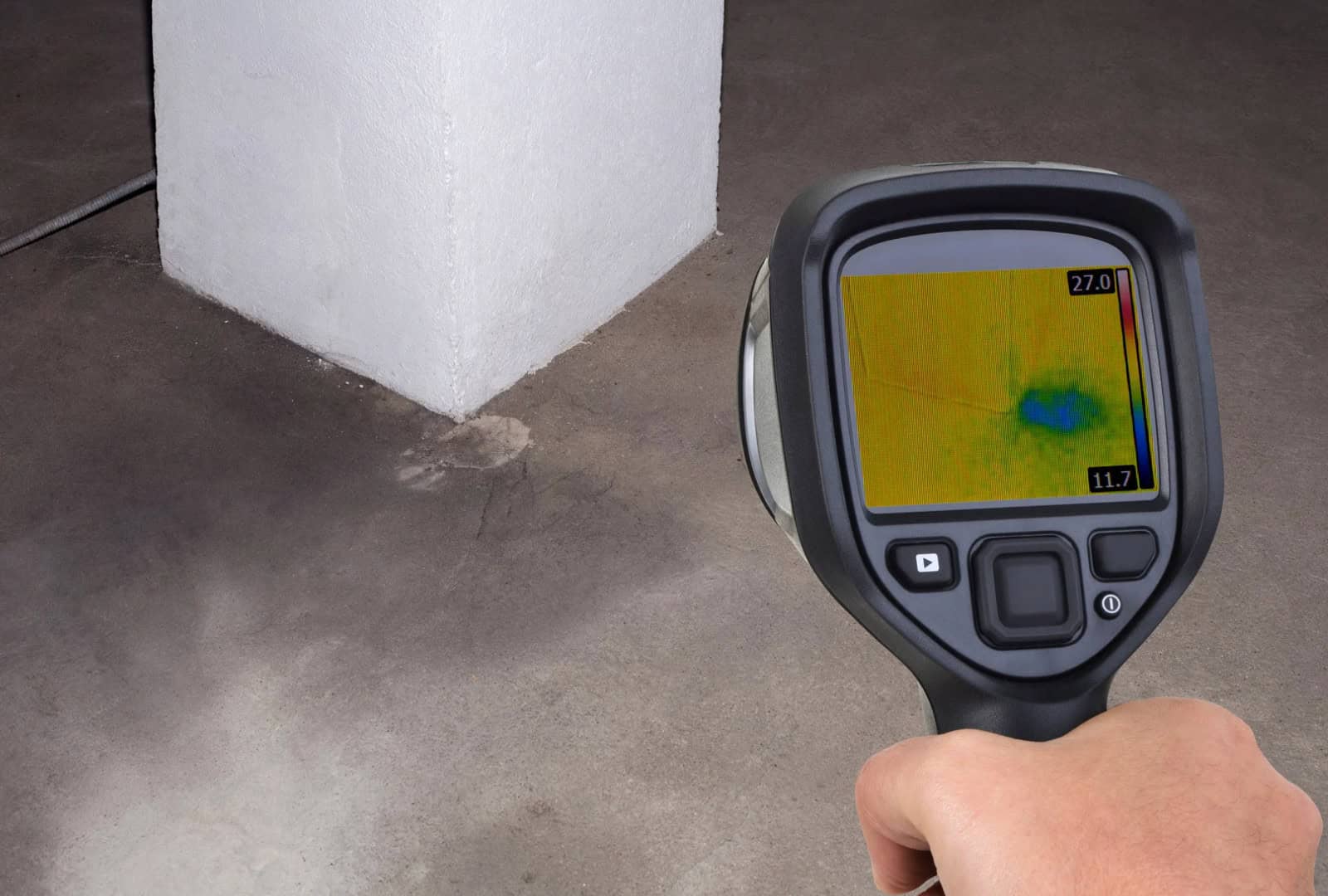
Thermal imaging cameras detect temperature differences on surfaces caused by moisture or moving water. A leaking hot water line beneath a slab, for example, produces a warm spot visible on an infrared scan that no amount of visual inspection would reveal. Thermal imaging is fast and completely non-invasive.
Tracer gas testing is used for slow leaks or plastic pipe systems where acoustic signals are harder to pick up. A harmless mix of hydrogen and nitrogen is introduced into the pipe, and a sensitive probe detects where the gas escapes at the surface. This method is highly accurate even in complex or deep pipe configurations.
In most cases, a plumber uses acoustic detection first to narrow the area, then confirms with thermal imaging or tracer gas before any surface is opened. The result is a precise repair location rather than a speculative search across your entire floor or garden.
For leaks in drain pipes rather than supply lines, a CCTV drain camera inspection can identify cracks, joint failures, and blockages without any excavation.
Sydney Water Smart Meters: The New Early Warning System
Sydney Water is currently rolling out smart meters to replace the 1.6 million mechanical meters across Greater Sydney. If your property already has one, you have an advantage. You can find out more about the rollout and free leak alerts on Sydney Water’s smart meters page.
Smart meters transmit hourly water use data, rather than the quarterly reading a mechanical meter provides. If your usage is unusually high, even at 3am when no one is awake, Sydney Water’s system flags it and notifies you by SMS, email, or phone call. This means many hidden leaks can now be identified within days rather than months.
If you have a mechanical meter and are concerned about a potential hidden leak, you can request an investigation through Sydney Water’s WaterFix Concealed Leaks service, which provides specialist assistance for detecting and repairing concealed leaks on the property side of the meter.
How to Prevent Hidden Leaks Before They Start
Catching a leak after it has been running for three months is expensive. The better strategy is making hidden leaks less likely in the first place.
- Replace flexible hoses every five to ten years. Braided flexible hoses are the most common cause of sudden, catastrophic internal water damage in Sydney homes. They fail without warning. If yours are more than a decade old, replacing them is cheap insurance. Ask your plumber to check them as part of any routine visit.
- Service your hot water system annually. The pressure relief valve and tempering valve are the parts most likely to develop a slow drip. Annual servicing catches deterioration before it turns into a running overflow.
- Check your toilet cistern every six months. The food colouring test takes two minutes and catches the single biggest source of ongoing hidden water waste in Australian homes.
- Watch your water bill trends. A bill that jumps by 30% or more without an obvious explanation (no new appliances, no change in household size, no garden watering spike) should prompt a meter check. Don’t wait for the next quarter.
- Get a routine plumbing inspection every two years. A licensed plumber can pressure-test supply lines, check flexible hoses, inspect the hot water system, and assess common failure points before they become leaks. Our scheduled plumbing maintenance guide covers what to expect from a routine inspection.
Frequently Asked Questions
My meter is spinning but the leak seems very small. Should I still get it checked?
Yes. Small leaks are still expensive over time, and “small” at the meter can mean something significant further along the line. A slow drip losing 50 litres per day may not seem urgent, but that’s 1,500 litres per month and a bill you’ll feel at the end of the quarter. Small leaks also tend to worsen rather than self-correct.
Can I claim a Sydney Water bill adjustment for a hidden leak?
Yes, through Sydney Water’s Hidden Leak Allowance. The leak must have been concealed (not visible), repaired by a licensed plumber, and the claim must be submitted within 12 months of the repair. Sydney Water typically credits 50% of the water usage increase in your worst-affected billing quarter. One claim is permitted per property every five years.
Is the leak my responsibility or Sydney Water’s?
The boundary is the water meter. Everything from the water main up to and including the meter is Sydney Water’s responsibility. Everything from the meter into your property is yours. If the meter is spinning, the leak is almost certainly on your side. If you suspect the leak is before the meter, call Sydney Water on 13 20 92.
What if the leak is under my concrete slab?
Slab leaks are one of the more complex jobs but they are well within reach of modern detection equipment. Acoustic correlation and tracer gas can pinpoint the exact location to within centimetres, which means the repair opening is small and targeted rather than a large excavation. For older copper pipe systems under slab, pipe relining is sometimes an option that avoids breaking the slab entirely.
RSP Finds Hidden Leaks Across Sydney
Rapid Service Plumbing uses acoustic leak detection, thermal imaging, and tracer gas to locate hidden leaks in supply lines, drainage systems, slabs, and underground pipes. We provide a written report with the exact leak location and a fixed repair quote before any surface is opened.
We are available 24/7 across Sydney. Contact us for a free quote or to book an inspection.
Key Takeaways
- Confirm the leak with the meter test: everything off, watch the dial for two to three minutes
- Check toilets first: a faulty cistern can waste up to 260 litres per day silently
- The cost is real: a hidden supply leak can add $500 to $1,200 to a single quarterly bill
- Sydney Water’s Hidden Leak Allowance credits 50% of the usage increase in your worst quarter; claim within 12 months of repair
- Professional detection is non-invasive: acoustic, thermal, and tracer gas tools locate leaks without opening walls or floors
- Smart meters send hourly usage alerts, giving earlier warning of hidden leaks than quarterly billing ever could
- Prevention matters: replace flexible hoses every 5 to 10 years, test your toilet cistern regularly, and watch your bill trends
Rapid Service Plumbing is a licensed Sydney plumbing service available 24/7 for hidden leak detection, pipe repairs, and emergency plumbing.